The best science kits for kids turn curiosity into hands-on discovery, whether a child wants to mix experiments, study nature, or build a deeper interest in a subject. Choose by age, how much guidance the activity needs, and whether you want a repeatable experiment set or a focused project with a finished display.
Quick Top Products
Learning Resources Primary Science Deluxe Lab Set
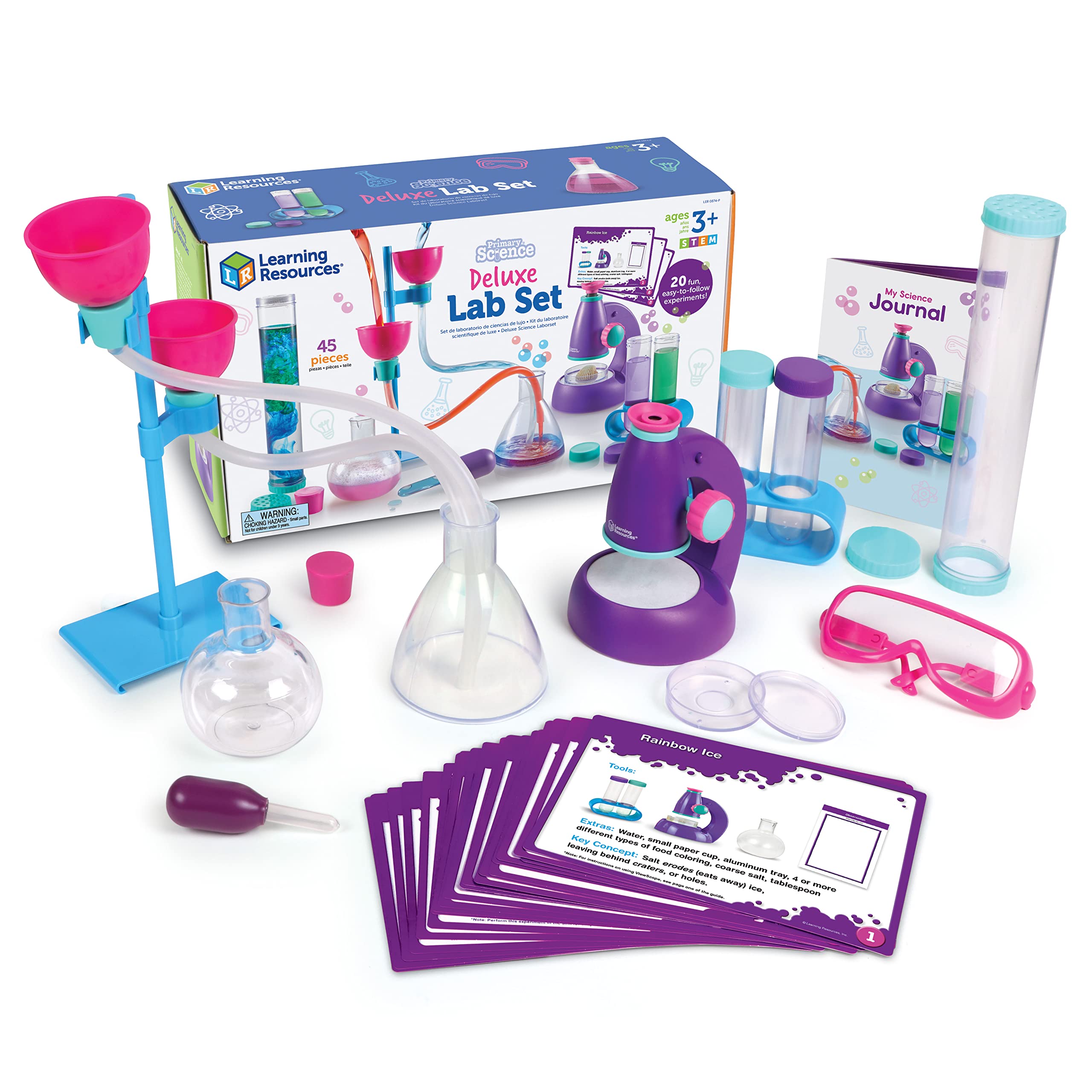
- Includes 45 pieces, including a microscope, test tubes, and safety glasses.
- Provides 20 step-by-step experiments using common household ingredients.
- Designed for children as young as three.
Best For: Young children ready to try several guided experiments with child-sized tools.

hand2mind Magnetic Science Kit
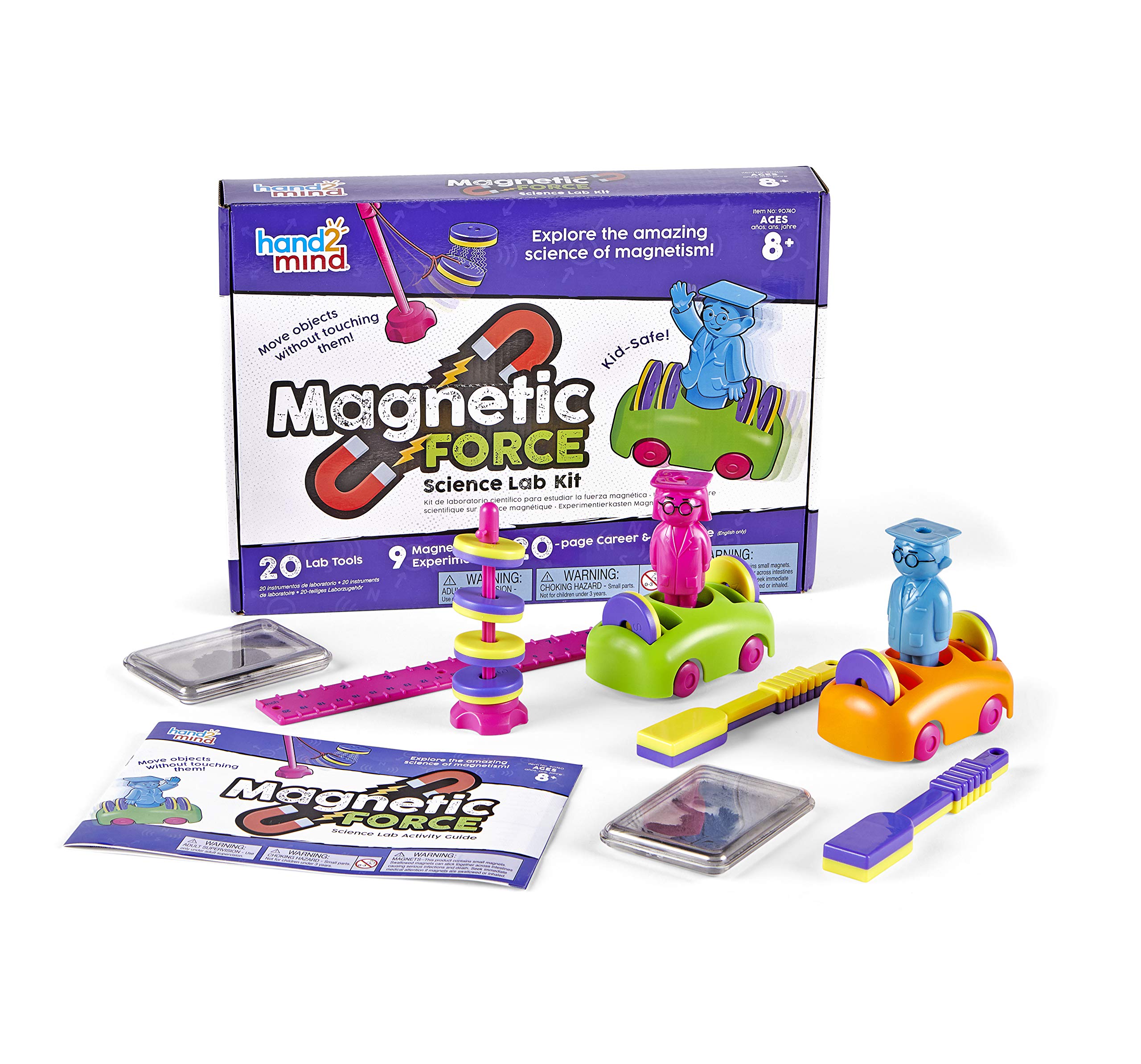
- Includes 20 lab tools and nine magnetism experiments.
- Activities include floating magnets, moving a train, and making a compass.
- Comes with a 20-page illustrated science guide.
Best For: Children ages eight and up who want structured activities about magnetic force.
Learning Resources Primary Science Lab Set
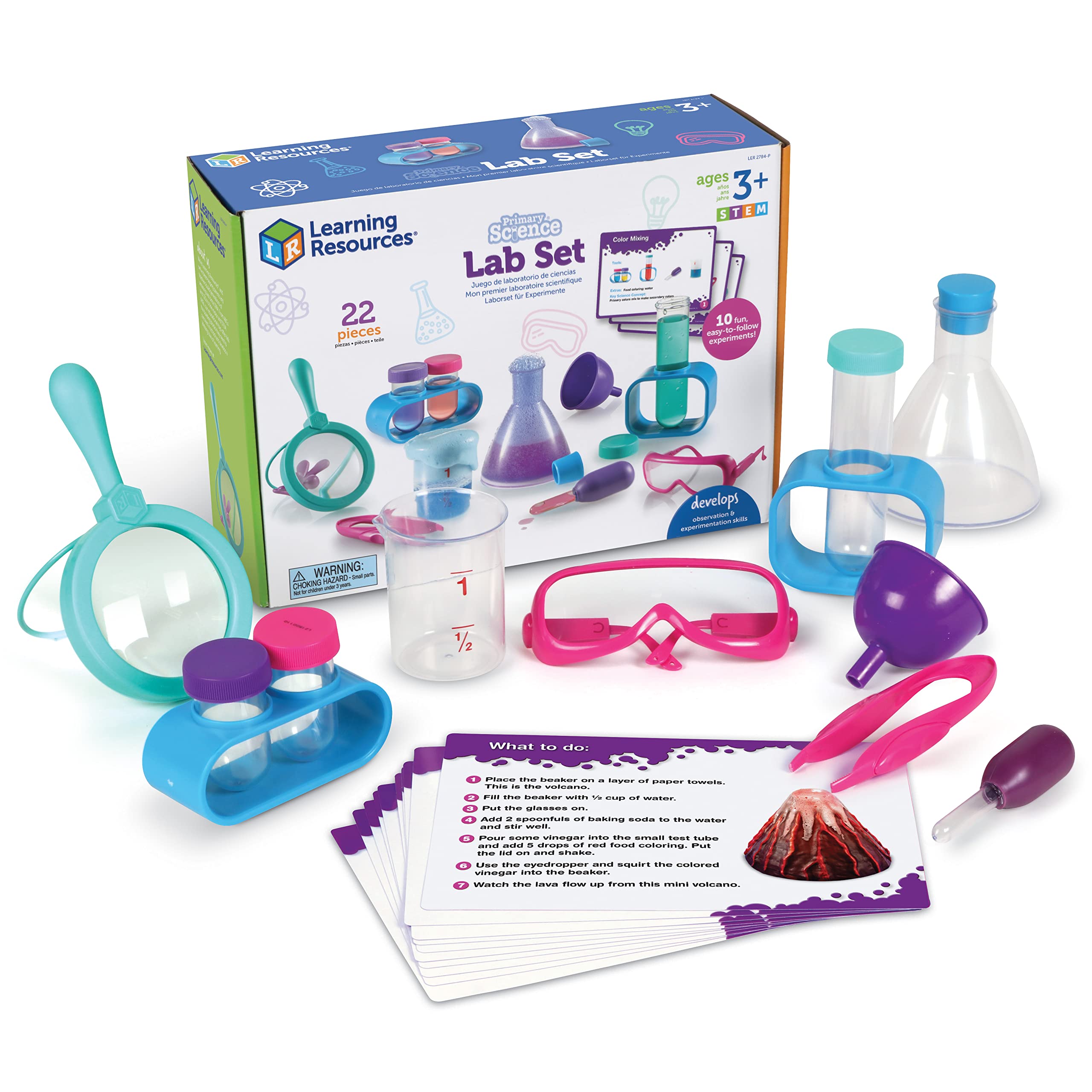
- Includes 22 pieces, such as flasks, test tubes, droppers, and a magnifying glass.
- Provides 10 double-sided activity cards.
- Designed for children ages three and up.
Best For: Children ages three and up practicing observation and simple experiments with adult guidance.
Learning Resources Super Magnet Lab Kit
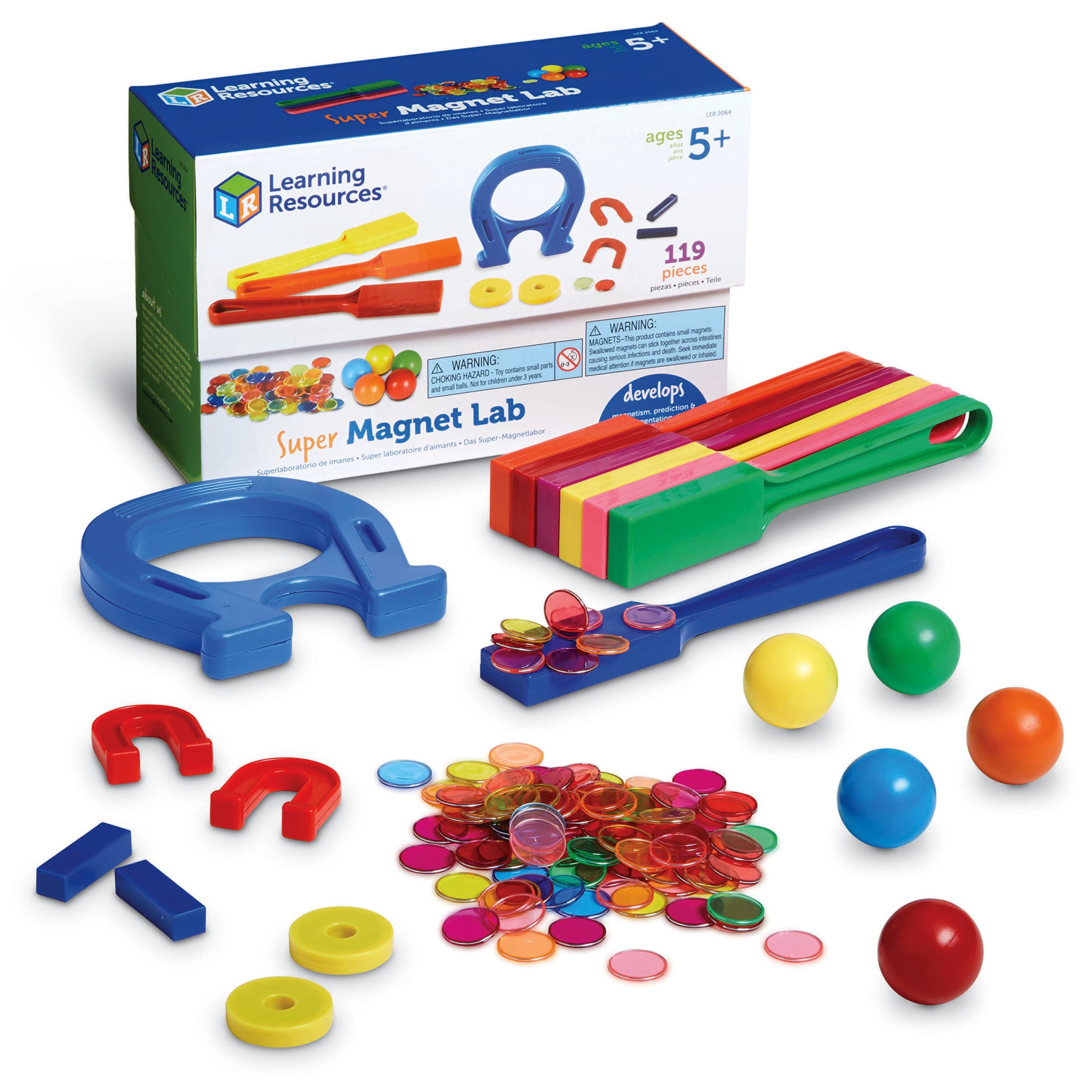
- Contains 119 pieces, including chips, wands, marbles, and several magnet shapes.
- Includes a teacher's guide and storage box.
- Designed for group learning, including up to 25 students in Grade 1 and up.
Best For: Classrooms or homeschool groups exploring attraction, repulsion, and magnetic materials.
Dan&Darci Light-Up Crystal Growing Kit
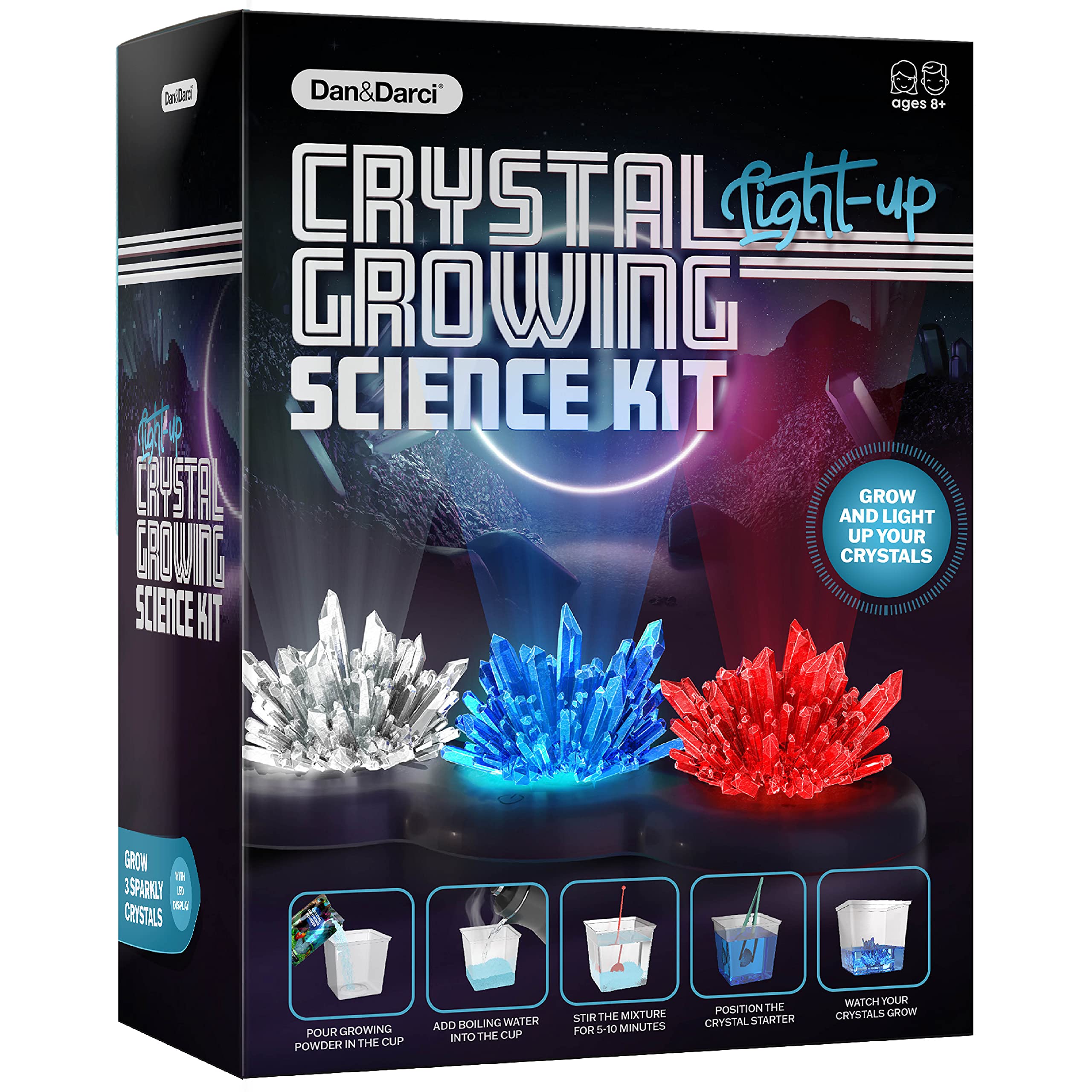
- Includes three growing cups, three powder colors, and three crystal starters.
- Comes with a 12-page guide about crystal formation.
- Features a USB-powered LED display and Micro-USB cable.
Best For: Children ages eight to twelve who enjoy growing specimens and displaying the result.
Dan&Darci Rock Collection for Kids
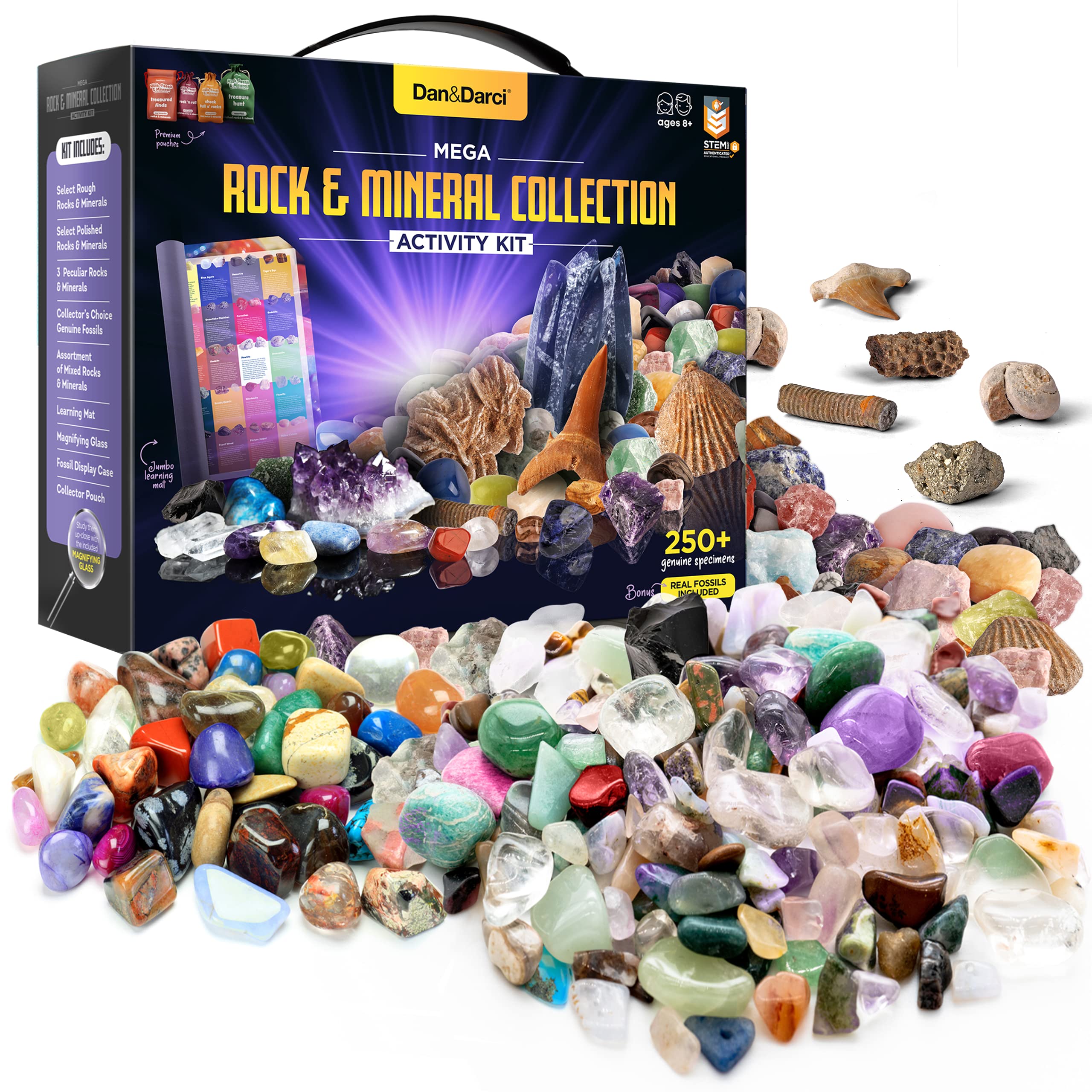
- Includes more than 250 rocks, gems, crystals, fossils, and minerals.
- Comes with a jumbo learning mat, magnifying glass, and fossil display case.
- Includes a collector's pouch and two pounds of specimens.
Best For: Children six and up who enjoy sorting, comparing, and learning about rocks and fossils.
Dan&Darci Light-Up Terrarium Kit
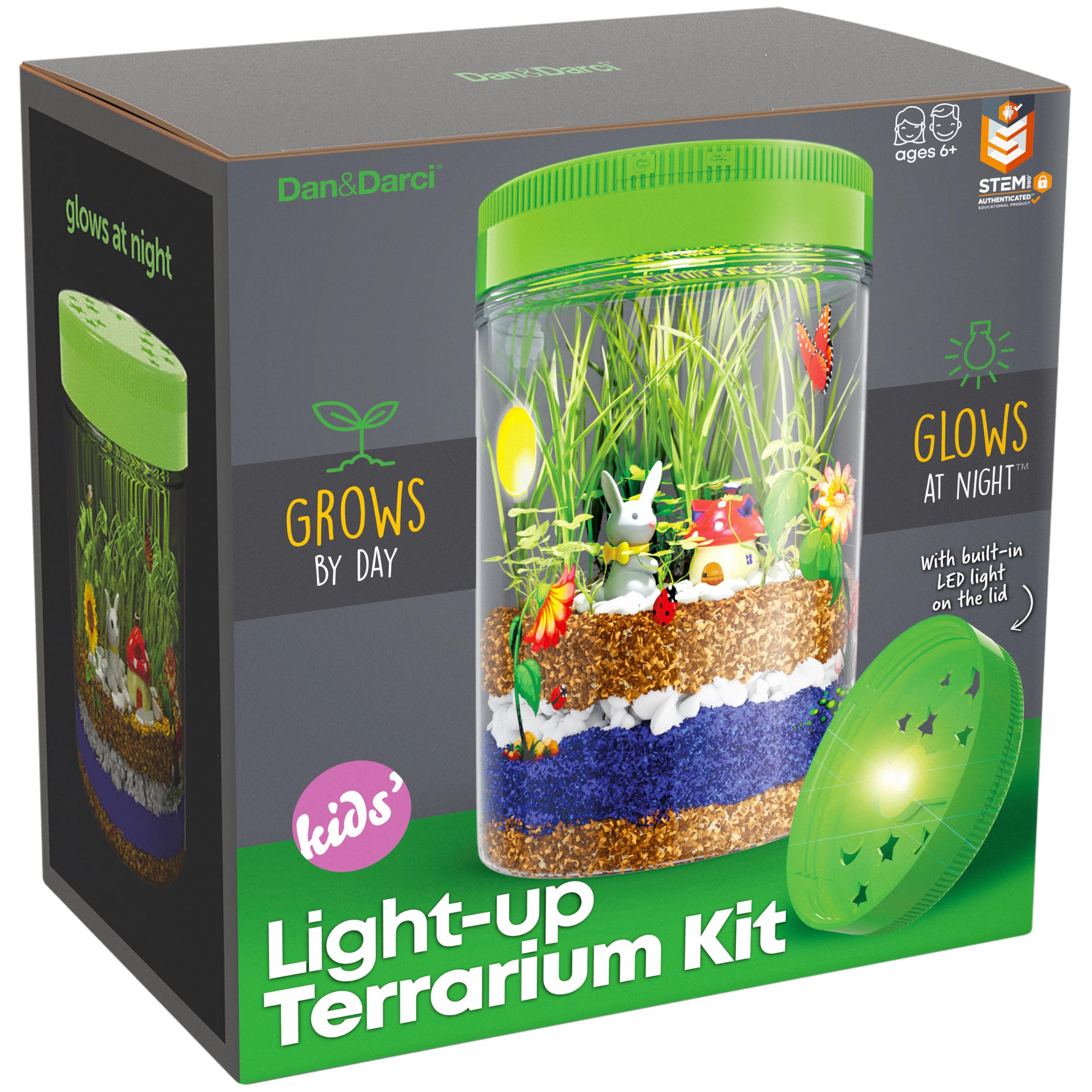
- Includes jar, soil, sand, rocks, wheatgrass and chia seeds, and decorations.
- Features a rechargeable LED lid with an included Micro-USB cable.
- Provides a spray bottle, wooden planting stick, and step-by-step guide.
Best For: Children ages six to twelve who want to build and watch a small planted display.
Learning Resources Beaker Creatures Bubbling Volcano Reactor
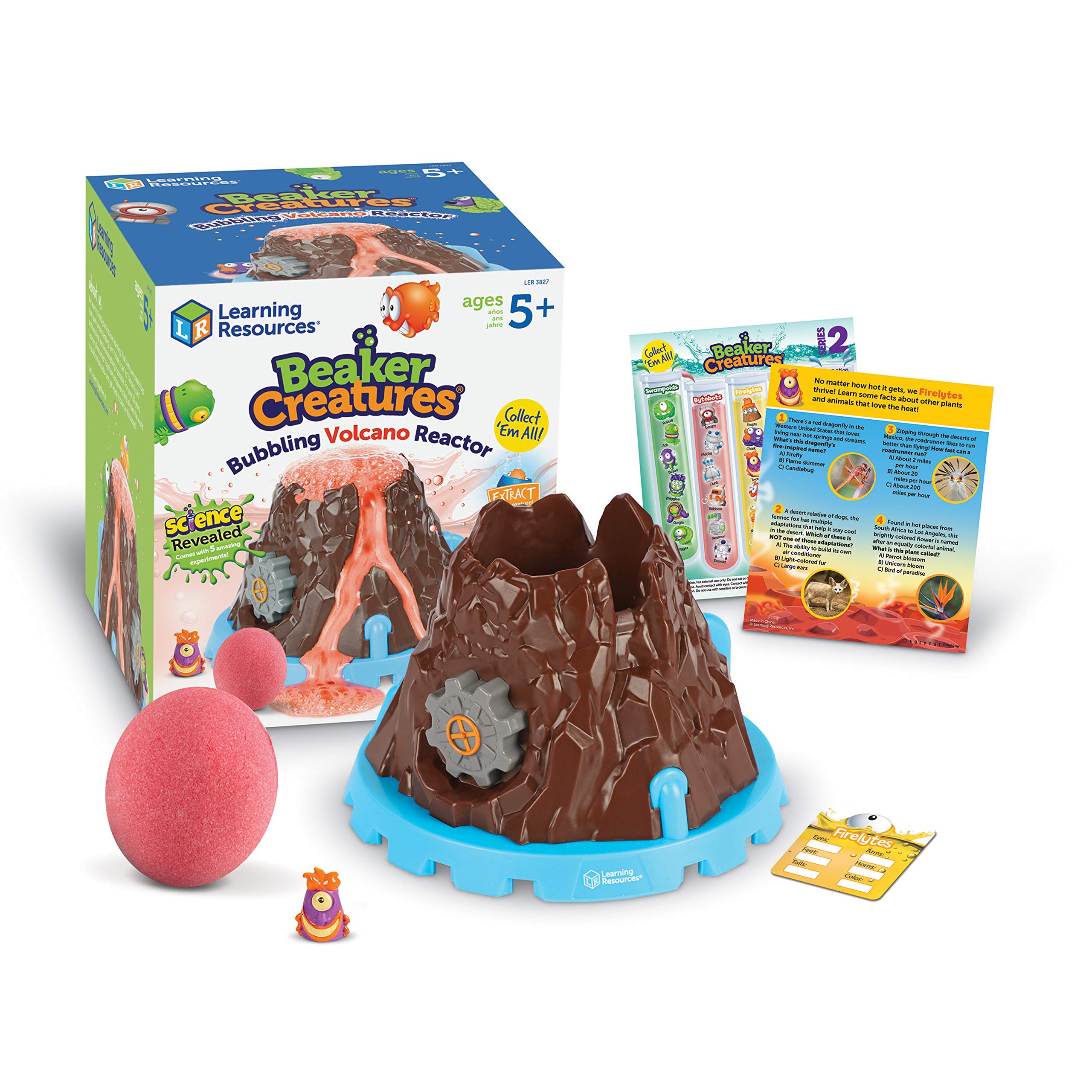
- Includes five fizzing, foaming experiments designed for repeat play.
- Contains one mystery Beaker Creatures figure in a Reactor Pod.
- Comes with a classification card and science-fact mini-poster.
Best For: Children five and up who enjoy foaming experiments with a collectible science theme.
Learning Resources Anatomy Models Bundle Set
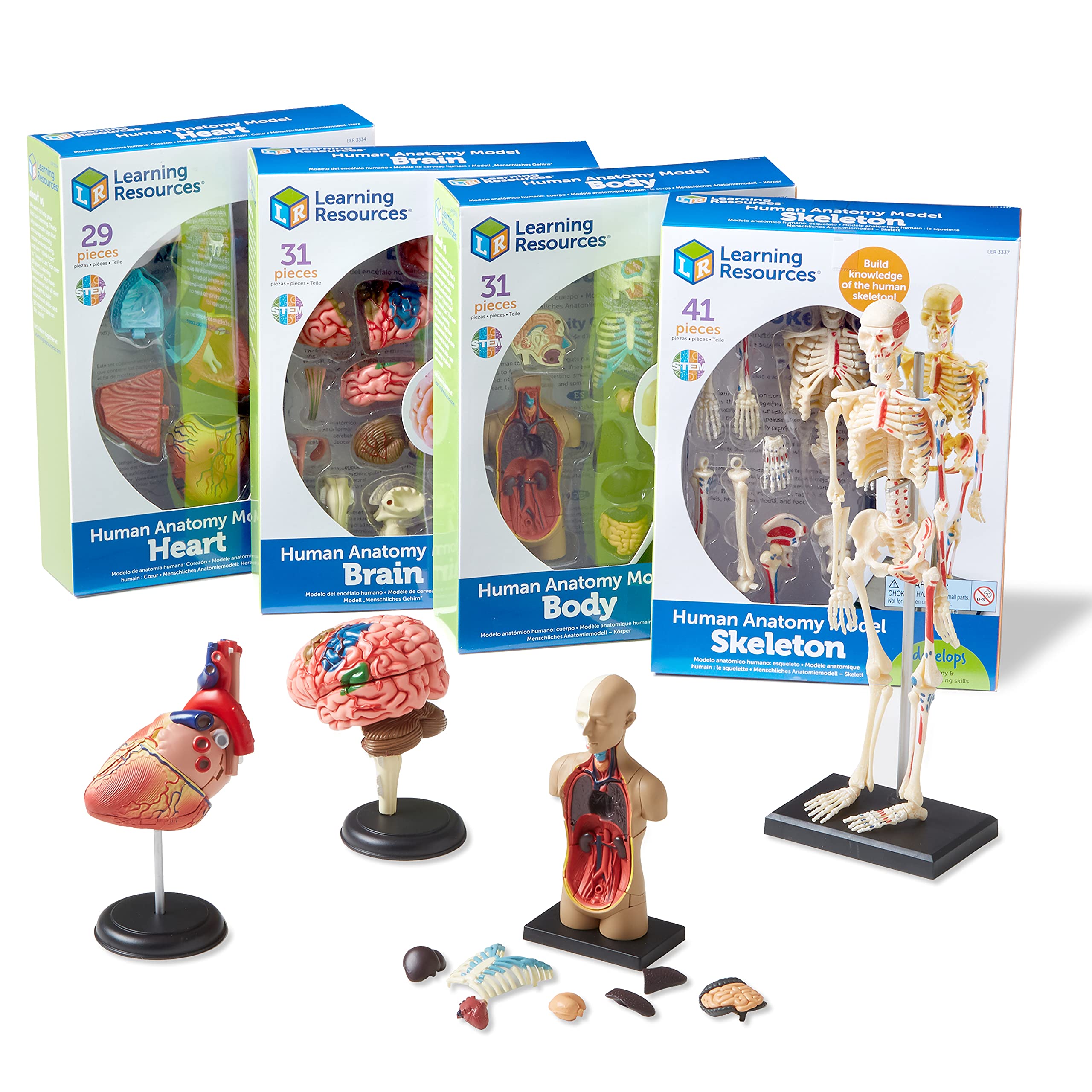
- Includes heart, brain, body, and skeleton models.
- Models can be assembled and disassembled for hands-on study.
- Recommended for ages eight and up.
Best For: Older students or classrooms comparing several human body structures in three dimensions.
Learning Resources Giant Inflatable Solar System
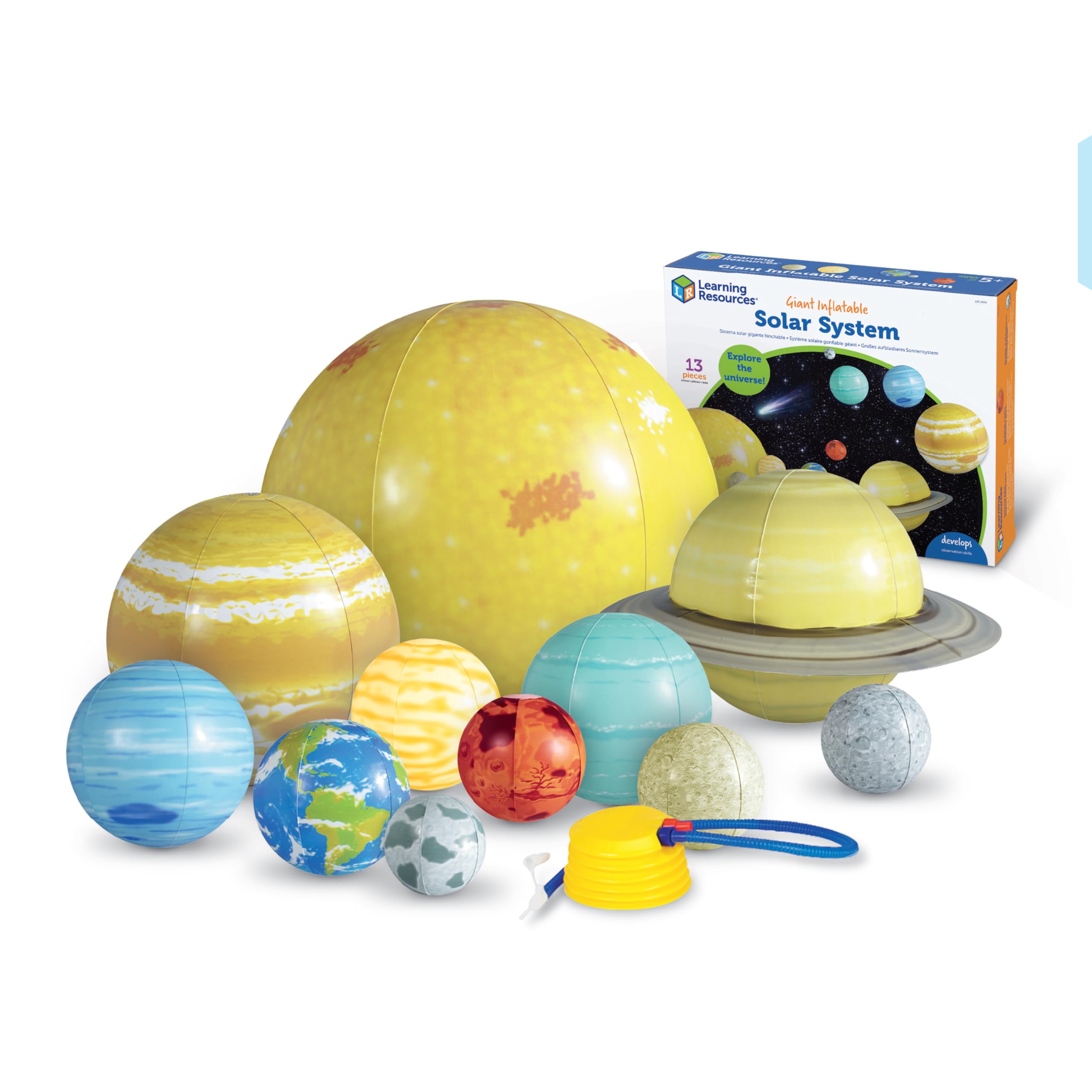
- Includes all eight planets, Pluto, the Sun, and Earth's Moon.
- Planet sizes range from five to 36 inches in diameter.
- Comes with a foot pump, repair patches, activity guide, and hanging loops.
Best For: Families or classrooms teaching planetary order and scale through a large visual display.
Most Complete Starter Lab
Learning Resources Primary Science Deluxe Lab Set - 45 Pieces, Ages 3+, Experiments for Kids, STEM Toys, Sensory Tube, Microscope for Students
This 45-piece set gives young children a broad introduction to hands-on science, with tools including a microscope, test tubes, and safety glasses. Its 20 step-by-step experiments use common household ingredients for activities such as mixing colors and making rainbow ice.
That combination makes it a flexible choice for home science time, especially when you want more than one themed project. The kit is designed for children as young as three, but an adult can help organize materials and guide each activity.
Check the experiment booklet and available household ingredients before starting.
Best For: Young children ready to try several guided experiments with child-sized tools.
| Pros | Cons |
|---|---|
|
|
Choose this lab set when variety matters and a child enjoys returning to different experiments. It covers observation and experimentation through 20 activities, while a more focused kit may offer deeper attention to one topic such as crystals or magnets.
Review the activity instructions before setting up, and plan to help younger children handle the sequence and ingredients. Its broad tool selection makes it a useful starting point for families who want to explore several science ideas.
Best Guided Magnetism Experiments
hand2mind Magnetic Science Kit for Kids 8-12, Kids Science Kit with Fact-Filled Guide, Make Magnets Float and Build a Compass, STEM Toys, 9 Science Experiments
This kit focuses on magnetism with nine experiments and 20 lab tools. Children can explore magnetic levitation by making magnets float or moving a train, and they can build a compass.
A colorful 20-page guide explains scientific principles and provides information alongside the activities, giving the experiments a more structured feel than a general-purpose science toy. It suits a child who likes testing forces and seeing a physical effect.
Check the guide for the workspace and any materials needed before beginning, and consider whether an adult will join in for the activities.
Best For: Children ages eight and up who want structured activities about magnetic force.
| Pros | Cons |
|---|---|
|
|
This is a strong fit for children who are ready to follow a sequence of physics activities and want to understand what magnets do. The nine experiments provide more direction than a set of standalone magnetic tools, while a large classroom magnet kit may offer more pieces for group exploration.
Check the guide and prepare an open work area for the experiments. Choose it when a structured introduction to magnetic force is more appealing than mixing unrelated science topics.
Best First Lab for Preschoolers
Learning Resources Primary Science Lab Set Pink - Experimentation and Observation for Kids, STEM Projects, Science Kits, Experiments, Pretend Play Scientists, Toddler Project Chemistry Toy
This 22-piece set introduces young children to science tools such as flasks, test tubes, droppers, tweezers, and a magnifying glass. Ten double-sided activity cards guide experiments and encourage children to describe steps and results, making the kit useful for practicing observation as well as early science vocabulary.
The pieces are sized for little hands, and the activities can work at home or in a classroom science center. It is a simpler option than the 45-piece deluxe lab set.
Check the activity cards and set aside time to work alongside younger children.
Best For: Children ages three and up practicing observation and simple experiments with adult guidance.
| Pros | Cons |
|---|---|
|
|
Pick this set for a young child who is beginning to explore science tools and needs straightforward prompts. The 10 cards make it easier to talk through what happens, while the deluxe version includes more tools and 20 experiments for families looking for a wider activity range.
An adult can help children follow the cards and gather any materials needed. The pink and teal pieces add a bright look, but the decision should center on the child's age and interest in guided exploration.
Best Magnet Set for Group Discovery
Learning Resources Super Magnet Lab Kit - 119 Pieces, Ages 5+, STEM ,Toys for Kindergartner, Science Learning Activities for Kids,Back to School Supplies,Teacher Supplies
The Super Magnet Lab is a 119-piece magnetic discovery set designed for classroom, homeschool, and group use. Its assortment includes magnetic chips, wands, marbles, ring magnets, bar magnets, and horseshoe magnets, giving children several shapes and tools to compare.
Activities can explore which materials are magnetic and how attraction and repulsion work. The set is described as accommodating up to 25 students in Grade 1 and up, and it includes a teacher's guide and storage box.
Check the piece inventory and activity guide when planning a group lesson, especially if using the set across multiple sessions.
Best For: Classrooms or homeschool groups exploring attraction, repulsion, and magnetic materials.
| Pros | Cons |
|---|---|
|
|
Choose this kit when several children will investigate magnetism together or when an educator wants a range of components for demonstrations. Its piece variety supports broader comparisons than the hand2mind kit's nine guided experiments, so it works best when a teacher or parent can shape the activity.
Check the guide and organize the small pieces before a group session. For one child seeking a defined sequence, the smaller experiment-focused kit may be easier to manage.
Best Crystal Growing Display
Light-up Crystal Growing Kit for Kids - Science Kits for Kids Age 8-12 - 6 7 8 9 10 Year Old Boy Birthday Gifts - Gifts for Girls - STEM Toys for 7 Year Old Boys, Experiment Crafts for Age 10-12 Years
This crystal kit turns a chemistry activity into a display project. It includes three growing cups, red, blue, and clear crystal powder, three crystal starters, and a 12-page illustrated guide about how crystals form.
Once the crystals have grown, children can place them on the USB-powered LED display to illuminate the formations. The setup offers a clear project arc from mixing and waiting to arranging a finished piece.
Crystal growth takes time, so it suits children who like observing changes over days. Check the guide for preparation steps and allow enough space for the cups during growth.
Best For: Children ages eight to twelve who enjoy growing specimens and displaying the result.
| Pros | Cons |
|---|---|
|
|
This is a good choice for a child who enjoys chemistry-themed crafts and wants something to show after the experiment. The three cups allow several colors to grow, while the light-up stand adds a presentation element that a general lab kit does not offer.
Plan for the time crystals need to grow and for a spot to leave the cups undisturbed. Check that the included Micro-USB cable suits your charging setup before planning to use the display.
Best Geology Collection
Dan&Darci Rock Collection for Kids - Includes 250+ Bulk Rocks, Gemstones & Crystals + Genuine Fossils and Minerals - 2 Lbs. - Geology Earth Science STEM Toys Activity, Gifts for Boys & Girls Ages 6+
This geology-focused collection brings together more than 250 rocks, gemstones, crystals, fossils, and minerals, weighing two pounds in total. Children can compare rough and polished specimens using the large learning mat, which pairs pictures with facts.
A magnifying glass, fossil display case, and collector's pouch support closer observation and organization. Rather than following a sequence of experiments, the kit invites repeated sorting and identification as a child explores each sample.
It suits a budding geology enthusiast or a shared activity. Check the learning mat and storage pieces to see how the collection can be arranged after exploration.
Best For: Children six and up who enjoy sorting, comparing, and learning about rocks and fossils.
| Pros | Cons |
|---|---|
|
|
Choose this collection for a child who likes tangible specimens and open-ended geology exploration. It offers many items to sort and inspect, while a crystal-growing kit provides a more guided process with a defined project outcome.
The learning mat and magnifier help turn browsing into observation, and the pouch and case provide ways to keep or display pieces. Consider whether the child is more drawn to collecting and comparing objects than to mixing materials and following experiment instructions.
Best Seed-Growing Craft
Dan&Darci Light-Up Terrarium Kit for Kids - STEM Science Kit - Educational DIY Toy for Boys & Girls - Birthday Gift - Craft Project Idea for Ages 6 7 8 9 10 11 12 Year Old - Craft for Boys
This terrarium kit combines seed planting with a decorative tabletop project. It includes a 4-by-6-inch jar, a light-up lid, vermiculite soil, blue sand, river rocks, wheatgrass and chia seeds, and miniature decorations.
Children layer the materials, plant the seeds, and use the included spray bottle and wooden stick during setup. The LED lid can recharge with the included Micro-USB cable, giving the finished terrarium a glow at night.
It offers a nature-oriented project rather than a set of repeatable experiments. Follow the charging guidance: use a standard USB cable and an adapter rated up to 5W, not a fast charger.
Best For: Children ages six to twelve who want to build and watch a small planted display.
| Pros | Cons |
|---|---|
|
|
Pick this kit for a child drawn to plants and creative arrangement, especially if watching seeds grow sounds more appealing than a sequence of lab experiments. Its jar includes the planting media and seeds, so the activity moves from building a layered scene to observing growth.
It is a single compact project, whereas the deluxe lab set supports more varied activities. Follow the charging directions before using the LED lid, and choose a stable spot for the planted jar.
Best Repeatable Fizzing Experiments
Learning Resources Beaker Creatures Bubbling Volcano Reactor - Ages 5+ Science Kits for Kids, STEM Toys for Kids, Fun Science Experiments for Kids
This bubbling volcano set pairs fizzing science with the Beaker Creatures collectibles. It offers five foaming experiments that can be repeated, plus one mystery creature inside a Reactor Pod.
A classification card and mini-poster add science facts to the play, and the activities encourage observation and critical thinking. The theme gives children a playful way into simple reactions while keeping the kit more focused than a broad lab set.
Check what materials are needed for each experiment before starting and plan a surface that can handle foam. It suits children who enjoy dramatic activity and collecting alongside learning.
Best For: Children five and up who enjoy foaming experiments with a collectible science theme.
| Pros | Cons |
|---|---|
|
|
This kit fits children who want visible, lively experiments and enjoy collectible characters. Five repeatable activities give it more ongoing play than a one-time excavation project, while the 45-piece lab set spans more types of science.
Check experiment materials and surface needs before setting up, particularly if several activities will happen in one session. The creature and fact cards add a playful hook, but the main appeal is the bubbling experiment format.
Best Multi-System Anatomy Set
Learning Resources Anatomy Models Bundle Set - Skeleton and Physiology, Human Body Model , Science Classroom Must Haves, Biology Teacher Supplies, Interactive Homeschool Projects, Montessori
This four-model anatomy bundle covers the heart, brain, body, and skeleton. Each model can be assembled and disassembled, giving students a way to handle and compare structures rather than study only flat diagrams.
The set is aimed at students, teachers, and homeschool learning, with an age recommendation of eight and up. Its range makes it suited to a human-body unit or a shared classroom resource.
It is a more specialized and higher-commitment choice than a general science kit. Check the space available for storing and displaying multiple models, and consider whether the child is ready for anatomy-focused study.
Best For: Older students or classrooms comparing several human body structures in three dimensions.
| Pros | Cons |
|---|---|
|
|
Choose this bundle when the goal is sustained study of human anatomy across several structures. Its four models offer broader anatomy coverage than the separate miniature body, brain, heart, or skeleton models, though the bundle requires more storage space and a stronger interest in biology.
Consider the child's age and whether a classroom or home study plan will use all four. For a younger learner seeking playful discovery across subjects, a lab set may be a more natural starting point.
Best Large-Scale Astronomy Model
Learning Resources Giant Inflatable Solar System - Project Kit, Space and Planet Model, Constellation Classroom Globe, STEM Science Projects Gifts, Preschool , Teacher Must Haves
This solar system project set uses inflatable planets to make astronomy a visible, room-scale activity. It includes all eight planets, Pluto, the Sun, and Earth's Moon, along with a foot pump, repair patches, and activity guide.
Planet sizes range from five to 36 inches in diameter, supporting comparisons of relative scale. Hanging loops make it possible to mount planets on a wall or ceiling, and the set can also be used for classroom demonstrations or home learning.
Check the display space and inflation time before setting it up, since the largest pieces need room to show their scale.
Best For: Families or classrooms teaching planetary order and scale through a large visual display.
| Pros | Cons |
|---|---|
|
|
This set works best when a child can learn by seeing and arranging objects at a large scale. It provides a distinctive astronomy focus that small tabletop kits do not, but requires more space for inflation, hanging, and storage.
Check room dimensions and where the planets will be displayed before buying. Choose it for visual solar system lessons or classroom demonstrations; for compact independent experiments, a lab kit or specimen collection will be easier to keep on a desk.
How to Choose Science Kits For Kids
How We Picked Science Kits for Kids
We prioritized kits that give children a clear way to investigate a topic, with included materials, tools, guides, or activities that connect play to observation. The selections span early lab exploration, magnetism, geology, crystals, seeds, fizzing reactions, anatomy, and astronomy.
This range matters because the right science kit depends on whether a child wants repeated experiments, a collection to study, or a project to build and display.
Age guidance and activity style also help narrow the field. The primary lab sets are aimed at young learners, while the magnetic experiment kit and crystal kit suit older children who can follow more detailed steps.
Large group resources such as the Super Magnet Lab and anatomy bundle make more sense for classrooms or shared homeschool use than for a child seeking a compact solo project.
Comparing Science Kits for Kids
The biggest distinction is between kits built around repeated activities and kits centered on one project or subject. The deluxe lab set offers 20 experiments and a variety of tools; the hand2mind kit focuses on nine magnetism demonstrations, while the volcano reactor gives five repeatable foaming experiments.
For a young beginner, the 22-piece Primary Science Lab Set adds activity cards and basic tools without the larger deluxe assortment.
Nature and collection kits work differently. The rock collection invites children to sort and compare many specimens, while the terrarium kit uses seeds and layered materials for a growing display.
The crystal kit also grows over time, then adds an illuminated stand. Anatomy models and the inflatable solar system are better suited to visual study and demonstration than to chemistry-style experiments.
| Product | Standout features | Best for |
|---|---|---|
| Learning Resources Primary Science Deluxe Lab SetCheck Price |
| Young children ready to try several guided experiments with child-sized tools. |
| hand2mind Magnetic Science KitCheck Price |
| Children ages eight and up who want structured activities about magnetic force. |
| Learning Resources Primary Science Lab SetCheck Price |
| Children ages three and up practicing observation and simple experiments with adult guidance. |
| Learning Resources Super Magnet Lab KitCheck Price |
| Classrooms or homeschool groups exploring attraction, repulsion, and magnetic materials. |
| Dan&Darci Light-Up Crystal Growing KitCheck Price |
| Children ages eight to twelve who enjoy growing specimens and displaying the result. |
| Dan&Darci Rock Collection for KidsCheck Price |
| Children six and up who enjoy sorting, comparing, and learning about rocks and fossils. |
| Dan&Darci Light-Up Terrarium KitCheck Price |
| Children ages six to twelve who want to build and watch a small planted display. |
| Learning Resources Beaker Creatures Bubbling Volcano ReactorCheck Price |
| Children five and up who enjoy foaming experiments with a collectible science theme. |
| Learning Resources Anatomy Models Bundle SetCheck Price |
| Older students or classrooms comparing several human body structures in three dimensions. |
| Learning Resources Giant Inflatable Solar SystemCheck Price |
| Families or classrooms teaching planetary order and scale through a large visual display. |
Choosing a Science Kit by Age and Activity Style
For preschool-age discovery, look for large, approachable tools and adult-guided activities. The 22-piece lab set is designed for ages three and up, and the deluxe set begins at the same age with more pieces and experiments.
Young children will benefit from help organizing the materials, following activity cards, and describing what they notice.
For older children, consider how much structure they want. The magnetic kit provides a specific set of experiments and a guide.
The crystal kit asks for patience as specimens grow, and the rock collection supports independent comparison at a child-led pace. If the goal is a classroom activity, check whether the set includes enough tools and storage for the group.
Planning Experiments, Space, and Supplies
A science kit can need a little preparation even when its central materials are included. Read the activity steps first and check for household ingredients, a suitable work surface, or time to leave a project undisturbed.
Crystal growing and seed planting unfold over time, while fizzing experiments are more immediate and may need room for foam.
Display size also matters for project kits. The terrarium jar is a compact tabletop project, but the inflatable solar system includes planets up to 36 inches across and needs space for setup and storage.
For the terrarium's light-up lid, follow its charging directions and use a standard USB adapter rated up to 5W.
Which Science Kit Fits Your Child?
Choose the deluxe lab set for variety, the smaller Primary Science Lab Set for a young beginner, or the hand2mind kit when magnetism is the main interest. The Super Magnet Lab is a better match for group exploration.
Children drawn to nature may prefer the rock collection or terrarium; pick the crystal kit when a growing project and lighted display sound appealing.
For focused study, the anatomy bundle covers four body models, while the inflatable solar system offers an oversized visual lesson in astronomy. The volcano reactor suits children who want repeatable fizzing activities with a collectible theme.
Match the kit to the child’s preferred way to explore, then check the age guidance, setup needs, and available space before choosing.