The best portable projectors balance easy transport with a setup that suits your viewing space and devices. These two models take different approaches: a palm-sized projector for compact flexibility and a short-throw home projector with higher listed brightness.
Quick Top Products
Kodak Ultra Mini Portable Projector
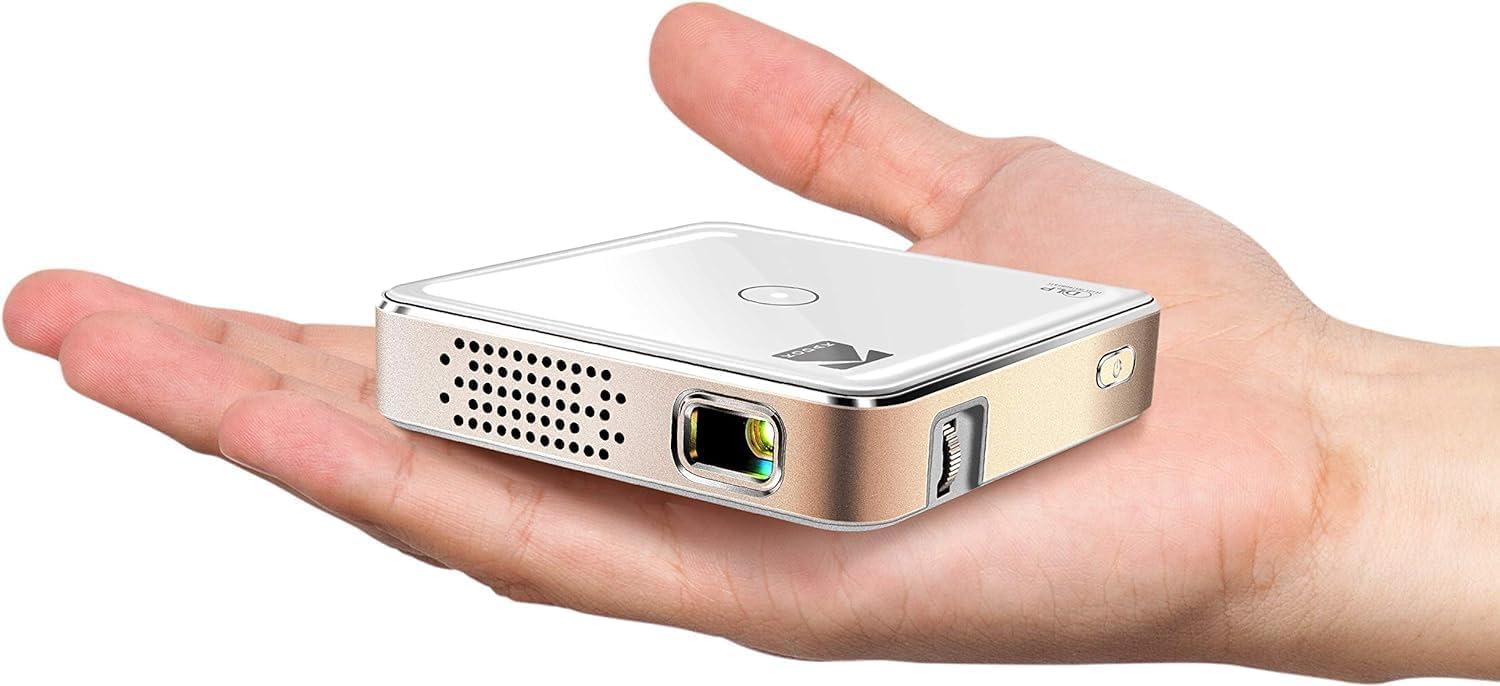
- Palm-sized DLP design for carrying in a bag or pocket.
- Supports 1080p and displays up to a 100-inch image.
- Includes HDMI, USB, MicroSD, a built-in speaker, and 3.5 mm input.
Best For: People who want a compact projector for travel, presentations, or casual viewing in a dim room.

Optoma GT2000HDR
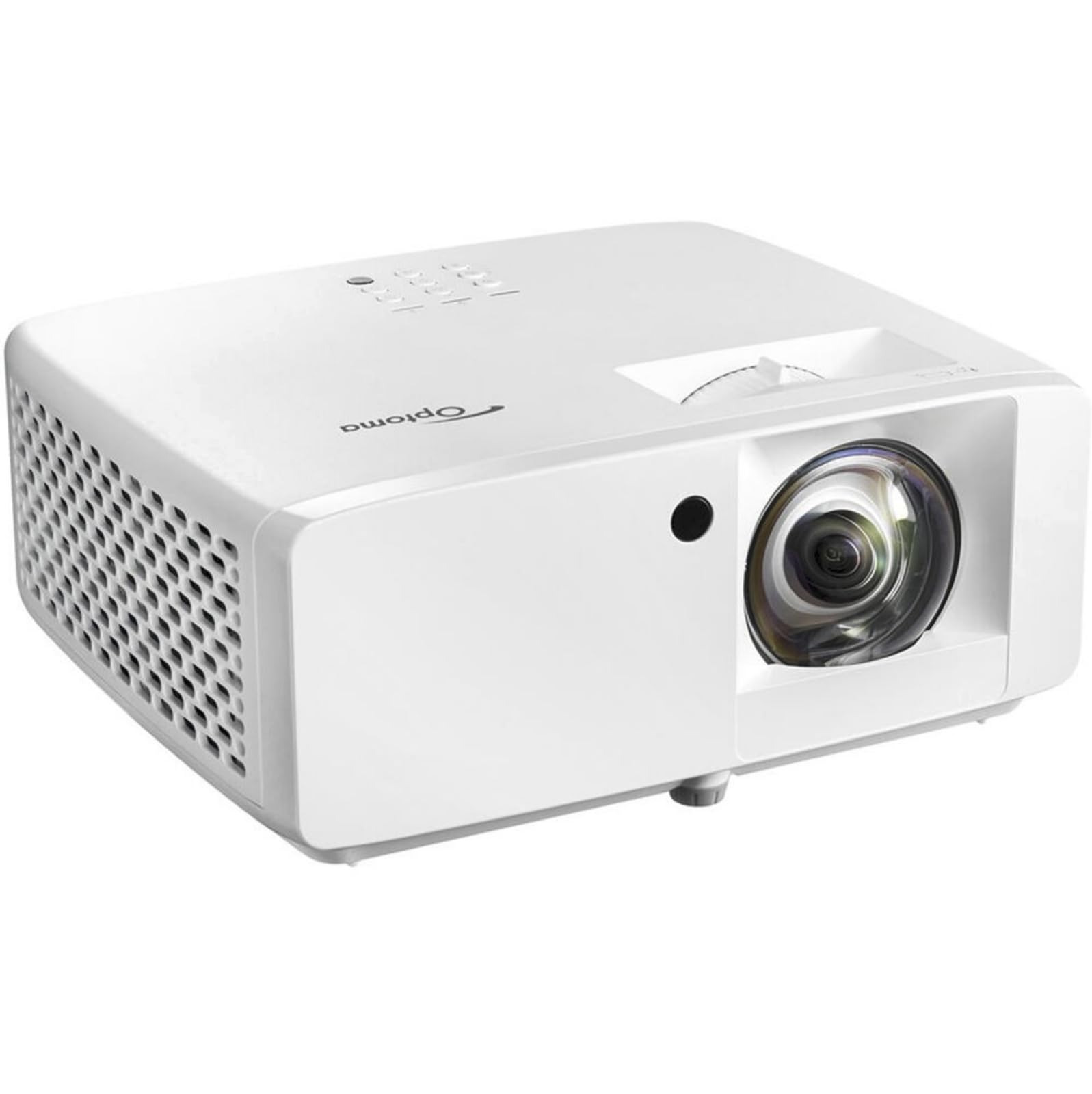
- Ultra-compact short-throw laser projector.
- Full HD 1080p resolution with listed brightness of 3,500 lumens.
- Eco-friendly design and external power supply.
Best For: Viewers seeking a compact Full HD laser projector for a home setup where short-throw placement is useful.
Palm-Sized Pico Projector
Kodak Ultra Mini Portable Projector - HD 1080p Support LED DLP Rechargeable Pico - 100 Display Built-in Speaker - HDMI USB and Micro SD - Compatible with iPhone iPad Android Phones"
The Kodak Ultra Mini is a palm-sized DLP projector designed to slip into a handbag, briefcase, or pocket. It supports 1080p input and can display up to a 100-inch image, with best performance in a dark or dim room.
HDMI, USB, and MicroSD connections support a range of media sources, and a built-in speaker plus 3.5 mm input provide audio options. Its small form makes carrying it straightforward, though the product details do not give a brightness figure or battery runtime.
Plan the setup around available light, power, and compatible connections.
Best For: People who want a compact projector for travel, presentations, or casual viewing in a dim room.
| Pros | Cons |
|---|---|
|
|
Choose the Kodak when carrying size and connection options matter more than a documented brightness rating. It supports up to a 100-inch image, but its guidance favors dark or dim rooms, so ambient light is a key setup consideration.
Before buying, confirm how you will power it and whether your phone, tablet, or other source can connect through HDMI, USB, or MicroSD. Battery runtime is not specified, so do not assume it can run untethered for a particular length of time.
Short-Throw Laser Home Setup
Optoma GT2000HDR Ultra-Compact Short Throw Full HD Home Laser Projector
The Optoma GT2000HDR is an ultra-compact short-throw laser projector with Full HD 1080p resolution. Its listed brightness is 3,500 lumens, giving buyers a concrete figure to consider when matching a projector to a room.
The eco-friendly design and external power supply are also specified. Compared with a pocketable pico model, this is a home-oriented projector whose short-throw format may help when placement distance is a consideration.
The available details do not give throw ratio, dimensions, or weight, so check those against your screen position and portability needs before choosing it.
Best For: Viewers seeking a compact Full HD laser projector for a home setup where short-throw placement is useful.
| Pros | Cons |
|---|---|
|
|
Consider the Optoma if you want a compact short-throw projector for home viewing and value a listed 3,500-lumen brightness figure. Its Full HD resolution and laser design distinguish it from the Kodak's pocket-focused pico format.
Before deciding, check the throw ratio and the distance available between the projector and screen, since those details are not specified here. Also account for the external power supply if you expect to move the setup often.
How to Choose Portable Projectors
How We Picked Portable Projectors
These two picks serve distinct portable-projector needs: one is built around palm-sized carrying, while the other pairs an ultra-compact form with short-throw laser projection for home use. The useful criteria are transport size, room and placement fit, image support, brightness information, and the connections or power details that shape setup.
The Kodak supports 1080p input and an image up to 100 inches, with best performance in a dark or dim room. The Optoma offers Full HD 1080p and lists 3,500 lumens.
Those facts help frame the choice, but actual placement and ambient light still matter for the room where you plan to watch.
Comparing Portable Projectors for Room and Setup Fit
The Kodak is the more pocket-oriented option, with HDMI, USB, MicroSD, a built-in speaker, and a 3.5 mm input. It suits buyers who value compact carrying and flexible media connections, provided the viewing space can be dimmed.
Its brightness and battery runtime are not specified, so plan around a suitable power source and check device compatibility.
The Optoma is a short-throw home projector with a listed 3,500-lumen brightness figure and an external power supply. Short-throw placement can be relevant when you need to position the projector relatively close to the screen, but verify its throw ratio and required image distance before purchase.
Its dimensions are not specified, so 'ultra-compact' alone may not answer whether it fits your travel plans.
| Product | Standout features | Best for |
|---|---|---|
| Kodak Ultra Mini Portable ProjectorCheck Price |
| People who want a compact projector for travel, presentations, or casual viewing in a dim room. |
| Optoma GT2000HDRCheck Price |
| Viewers seeking a compact Full HD laser projector for a home setup where short-throw placement is useful. |
Choosing a Portable Projector for Travel
For trips, consider both the projector and everything needed to use it: power, source device, cables, and audio. The Kodak's palm-sized design is explicitly suited to slipping into a bag or pocket, and its onboard speaker can simplify a basic setup.
Confirm your phone or tablet can send video through a compatible connection, and check runtime and power needs for the places you will use it.
The Optoma has an external power supply, so include that in your packing and setup plans. Its size and weight are not specified; verify them if portability means frequent transport rather than simply a compact footprint at home.
Matching Brightness and Projection Distance to Your Room
Ambient light and screen distance shape projector fit. The Kodak is positioned for dark or dim rooms, making it a better match for controlled-light viewing than for a bright space.
The Optoma's 3,500-lumen figure provides a brightness point of comparison, but it does not replace checking the room, screen, and viewing conditions you have.
Short-throw is a practical feature when the projector needs to sit nearer the screen, but the Optoma's exact throw ratio is not specified here. Confirm the screen size and available placement distance before buying.
For either model, avoid assuming that resolution or a maximum image size alone guarantees the right image in your room.
Who Should Buy Which Portable Projector?
Choose the Kodak Ultra Mini if easy carrying, pocketable scale, and a selection of onboard inputs matter most, and you can use it in a dim room. Check power arrangements, device output compatibility, and battery runtime before relying on it for a particular trip or session.
Choose the Optoma GT2000HDR if you want a compact Full HD laser projector with short-throw placement and a listed 3,500-lumen brightness figure for a home setup. Verify throw ratio, dimensions, and screen distance, and account for its external power supply.