This Babysense split screen baby monitor review looks at a two-camera system built for caregivers who want to view two spaces on one dedicated screen without relying on Wi-Fi or an app.
Its combination of remote camera controls, night vision and soothing features may suit a shared nursery or a household caring for more than one child.
Babysense Monitor Review Summary
The quick verdict
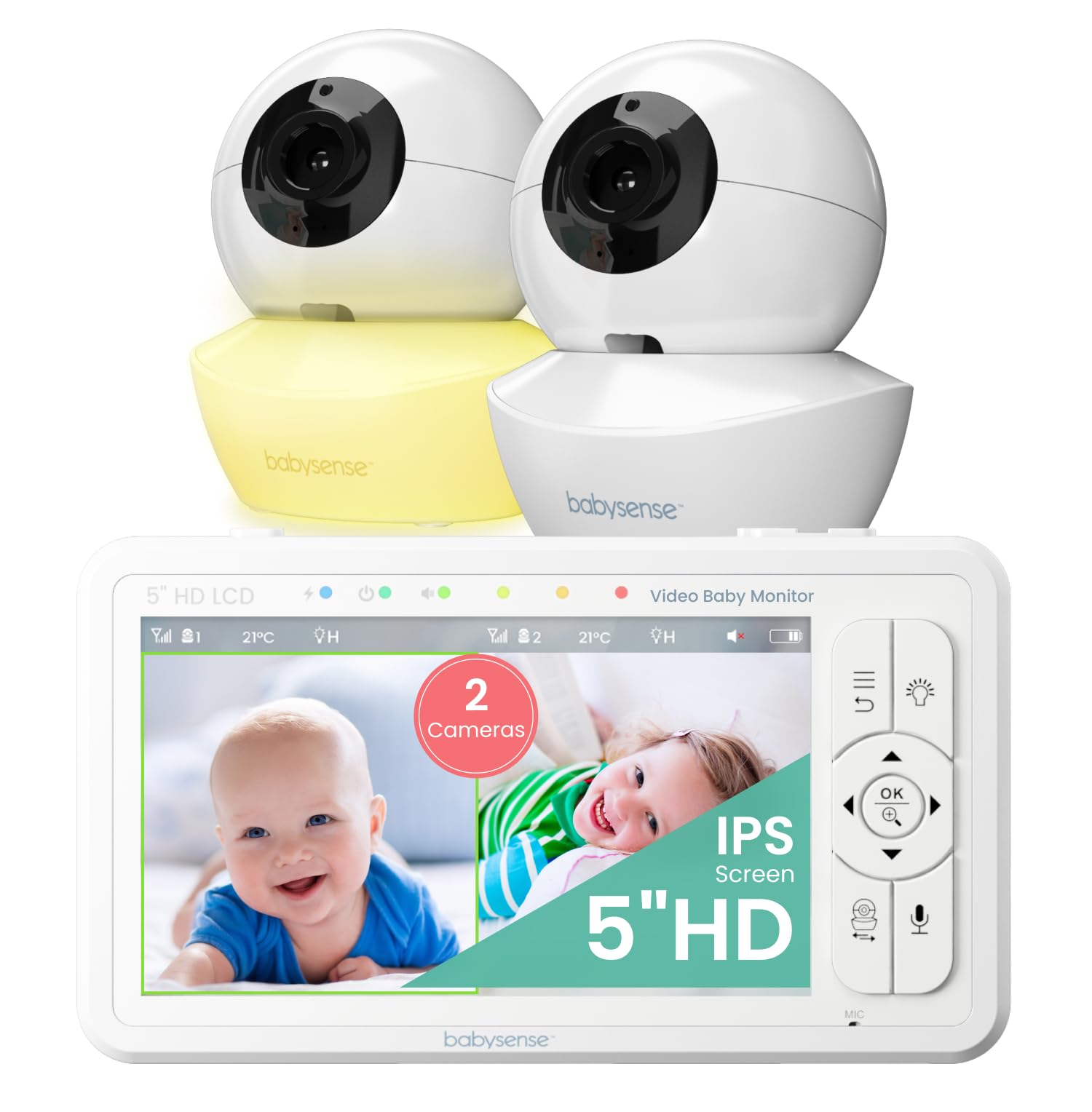
7,000+ ratings
Read Amazon ReviewsBabysense HD Split-Screen Baby Monitor
A practical fit for caregivers who want two nursery views on a private, non-Wi-Fi parent unit with soothing and two-way audio features.
- Two cameras are included, and the 5-inch display supports split-screen viewing of both camera feeds.
- The system supports up to four cameras connected to the same display unit.
- The display provides 720p HD video, with remote pan and tilt and up to 4× zoom.
- The stated range is up to 1000 feet in open space; actual coverage depends on the surroundings.

Pros
- Two included cameras make a multi-room or two-child setup possible from the start.
- Split-screen viewing keeps both camera feeds visible on one parent display.
Consider before buying
- Split-screen audio focuses on one camera at a time; scan mode alternates audio focus every 15 seconds.
- The 1000-foot range applies in open space, so walls and the layout may affect how well the signal suits a particular home.
Read the full review summary
The main appeal is a ready-to-use two-camera setup: the 5-inch parent display can show both feeds, while the cameras include night lights and the system supports night vision, two-way audio, white noise and lullabies.
Remote pan and tilt plus up to 4× zoom give caregivers ways to adjust the view from the parent unit. Up to four cameras can connect to one display, offering room to expand later.
This design is best suited to buyers who value a dedicated monitor and want to keep viewing off their home internet connection.
The tradeoff in split-screen mode is that audio remains focused on one camera at a time; scan mode switches the audio focus between cameras every 15 seconds.
That behavior is useful to understand if hearing both rooms continuously is central to your routine.
The buying factors
Babysense Monitor Scorecard
Editorial scores reflect listed features and buyer fit; they are not laboratory measurements or customer ratings.
Two-room viewing
Two cameras are included, and split-screen viewing puts both feeds on the parent display.
Audio coverage
Audio focuses on one camera at a time, with a scan mode that alternates every 15 seconds.
Privacy-conscious setup
The monitor and cameras do not require Wi-Fi or internet.
View adjustment
Remote pan and tilt and up to 4× zoom let caregivers adjust the camera view from the display.
Soothing options
White noise, programmed lullabies, two-way audio and adjustable night lights offer several comfort features.
Portability
The parent unit has a 4000 mAh battery and a power-saving mode, though runtime is not specified.
Key Features and Specifications of Babysense Monitor
- Two cameras are included, and the 5-inch display supports split-screen viewing of both camera feeds.
- The system supports up to four cameras connected to the same display unit.
- The display provides 720p HD video, with remote pan and tilt and up to 4× zoom.
- The stated range is up to 1000 feet in open space; actual coverage depends on the surroundings.
- Infrared night vision supports viewing in a dark nursery.
- Caregivers can use two-way audio, white noise and programmed lullabies; each camera also has a night light with adjustable intensity.
- A 4000 mAh battery and power-saving mode allow sound-triggered auto-activation of the monitor.
Pros and Cons of Babysense Monitor
Pros
- Two included cameras make a multi-room or two-child setup possible from the start.
- Split-screen viewing keeps both camera feeds visible on one parent display.
- No Wi-Fi or internet connection is needed for the monitor and cameras.
- Remote camera movement, zoom and several soothing options add flexibility for routine check-ins.
Consider before buying
- Split-screen audio focuses on one camera at a time; scan mode alternates audio focus every 15 seconds.
- The 1000-foot range applies in open space, so walls and the layout may affect how well the signal suits a particular home.
- Battery capacity is given, but no runtime is specified; caregivers who rely on long unplugged sessions should check expected use against their routine.
Who Should Buy Babysense Monitor?
Good fit
Consider this monitor if you want two camera views on a dedicated parent display and prefer a setup that does not depend on Wi-Fi or an app.
The included pair should be useful for monitoring two sleeping spaces, while the option to connect up to four cameras leaves room for a larger setup.
The combination of night vision, remote pan and tilt, zoom, two-way audio and built-in soothing features supports common nursery check-ins. Before choosing it, consider whether one-camera-at-a-time audio focus works for you, especially if both rooms need continuous listening.
Who should skip it
Look elsewhere if you need the monitor to play audio from multiple cameras simultaneously. Its described scan mode alternates the audio focus rather than mixing feeds.
If you plan to use the parent unit away from power for long stretches, confirm that its expected runtime fits your routine; the battery capacity is provided, but a runtime figure is not.
How the Babysense Monitor Fits a Two-Room Setup
A single screen for two camera views
With two cameras included and split-screen support, the system is designed to make two feeds available together on the 5-inch display. That can reduce the need to switch views during a quick check.
The option to add cameras up to a four-camera total may help caregivers who expect to monitor more rooms, although the description does not specify how larger camera counts are arranged onscreen.
Audio behavior matters as much as the picture
The monitor keeps audio attention on one camera at a time while showing both feeds.
Scan mode changes that focus every 15 seconds, which offers an automatic rotation for caregivers who want to hear from both rooms over time.
Think about how often you need to hear a particular room immediately; a rotating focus may be less convenient when simultaneous listening is a priority.
A dedicated connection without internet
The cameras work with the parent display without Wi-Fi or internet. For households that prefer a self-contained monitor rather than a phone-based viewing arrangement, this keeps routine viewing centered on the supplied screen.
Remote pan and tilt and up to 4× zoom let caregivers refine the view from that unit, while the stated 1000-foot range is an open-space maximum rather than a guarantee for every home's walls and layout.
Useful comfort functions, with a runtime question
White noise, programmed lullabies, two-way audio and adjustable night lights give caregivers several ways to respond from the parent unit.
Infrared night vision is intended for dark-room viewing, and the power-saving mode can activate the monitor based on sound.
The 4000 mAh battery indicates a portable parent unit, but without a runtime figure, buyers who need extended unplugged use should check whether its charging pattern fits their day.
Alternatives to Babysense Monitor
Battery-focused alternative
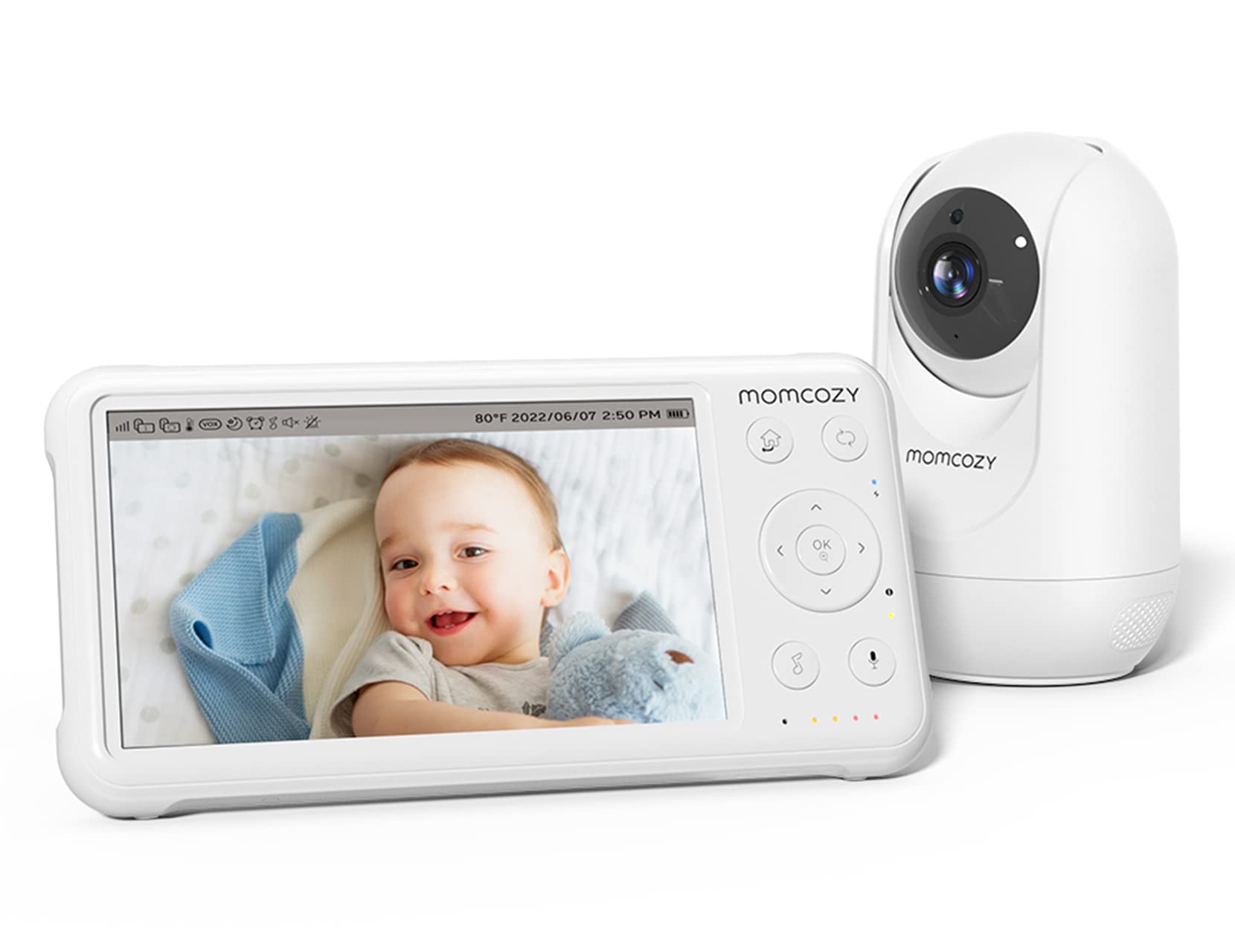
1,000+ ratings
Read Amazon ReviewsMomcozy BM01 Video Baby Monitor
Choose the Babysense if having two cameras included and a non-Wi-Fi monitor are key to your setup.
Consider the Momcozy if its listed 1080p camera and automatic cycling between two views better match your priorities; its description also lists Wi-Fi-free viewing as not stated, so check that connection approach before buying.
- The Momcozy BM01 is described with a 1080p camera, a 5-inch display, split-screen and loop playback, infrared night vision, a 5000 mAh battery, and two-way audio.
- Its split-screen view automatically loops between two views.
- The Babysense package includes two cameras and shows both feeds on a split-screen display; its audio focus remains on one camera at a time.
Expandable packing alternative
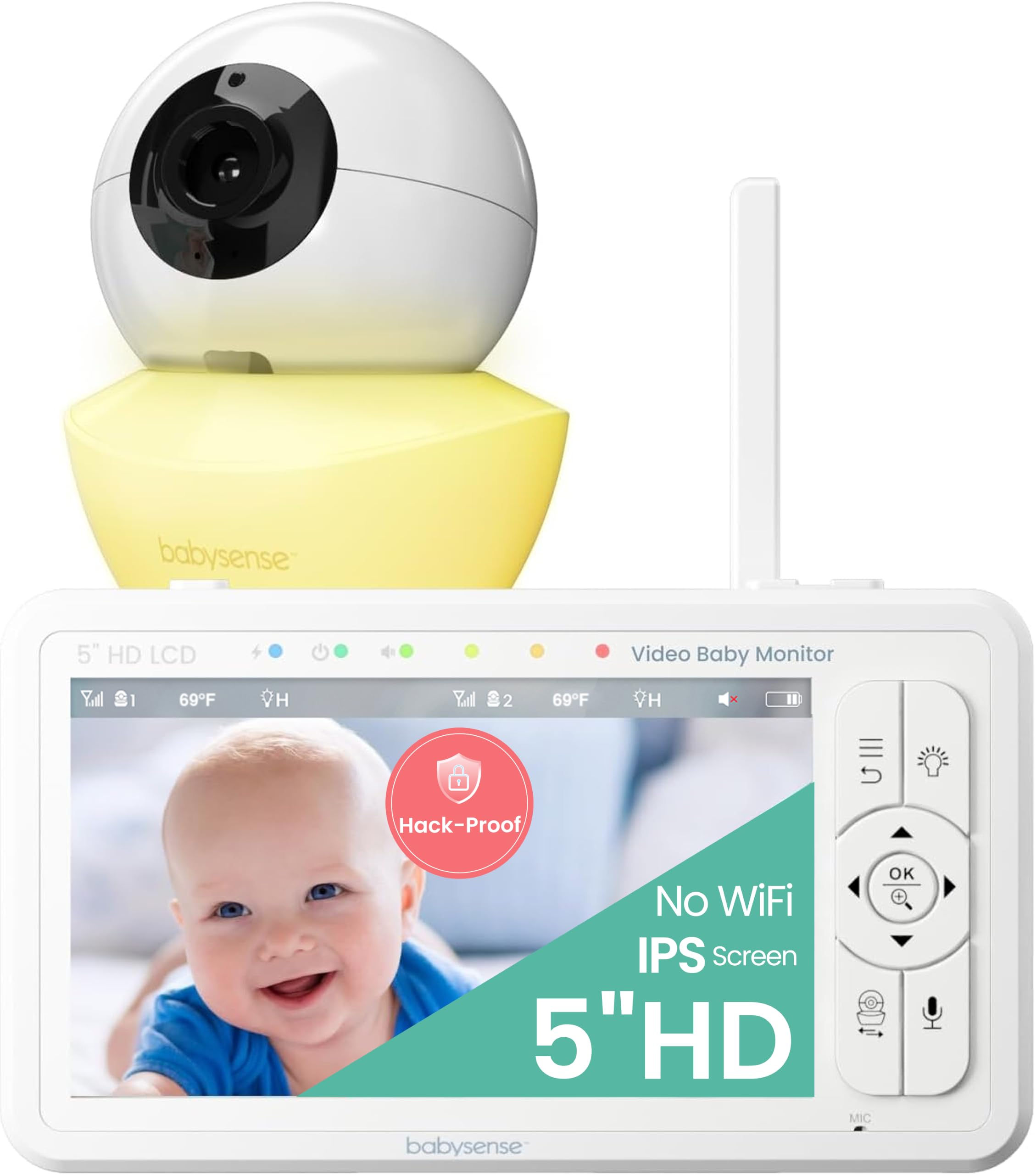
7,000+ ratings
Read Amazon ReviewsBabysense HD 5-Inch Video Baby Monitor
The reviewed two-camera package is the more direct fit if you need two camera feeds immediately.
Consider the single-camera alternative if one camera is enough to start and you value its specified battery-use estimates, temperature display or VOX alerts.
- This Babysense model includes one camera and a 5-inch 720p display, with remote pan and tilt, up to 4× zoom, two-way talk, night vision, an adjustable night light, VOX sound alerts and a room-temperature display.
- Its parent-unit battery is described as lasting up to 20 hours in VOX/ECO mode or up to 12 hours with continuous viewing, varying by settings and brightness; it can expand to four cameras and split-screen viewing.
- The reviewed Babysense package includes two cameras, split-screen viewing and audio that focuses on one camera at a time.
Is Babysense Monitor Worth It?
The Babysense HD Split-Screen Baby Monitor is worth considering for caregivers who want two camera views on one dedicated, non-Wi-Fi parent display.
Its included pair of cameras, night vision, remote view controls and soothing functions make it a flexible nursery option.
The key decision is whether one-camera-at-a-time audio suits your household, and whether the open-space range and unspecified battery runtime fit your home and routine.
If those tradeoffs are acceptable, this system offers a useful blend of multi-room viewing and simple, self-contained monitoring.
Your review at a glance
7,000+ ratings
Read Amazon ReviewsBabysense HD Split-Screen Baby Monitor
A practical fit for caregivers who want two nursery views on a private, non-Wi-Fi parent unit with soothing and two-way audio features.
- Two cameras are included, and the 5-inch display supports split-screen viewing of both camera feeds.
- The system supports up to four cameras connected to the same display unit.
- The display provides 720p HD video, with remote pan and tilt and up to 4× zoom.
- The stated range is up to 1000 feet in open space; actual coverage depends on the surroundings.