The best digital microscopes for kids make small details easier to explore, whether a child wants a screen-based close-up or a hands-on slide kit. Choose by age and setup: handheld viewing is portable, while tabletop models offer more room for slide preparation and shared activities.
Quick Top Products
TOMLOV P10 Handheld Microscope
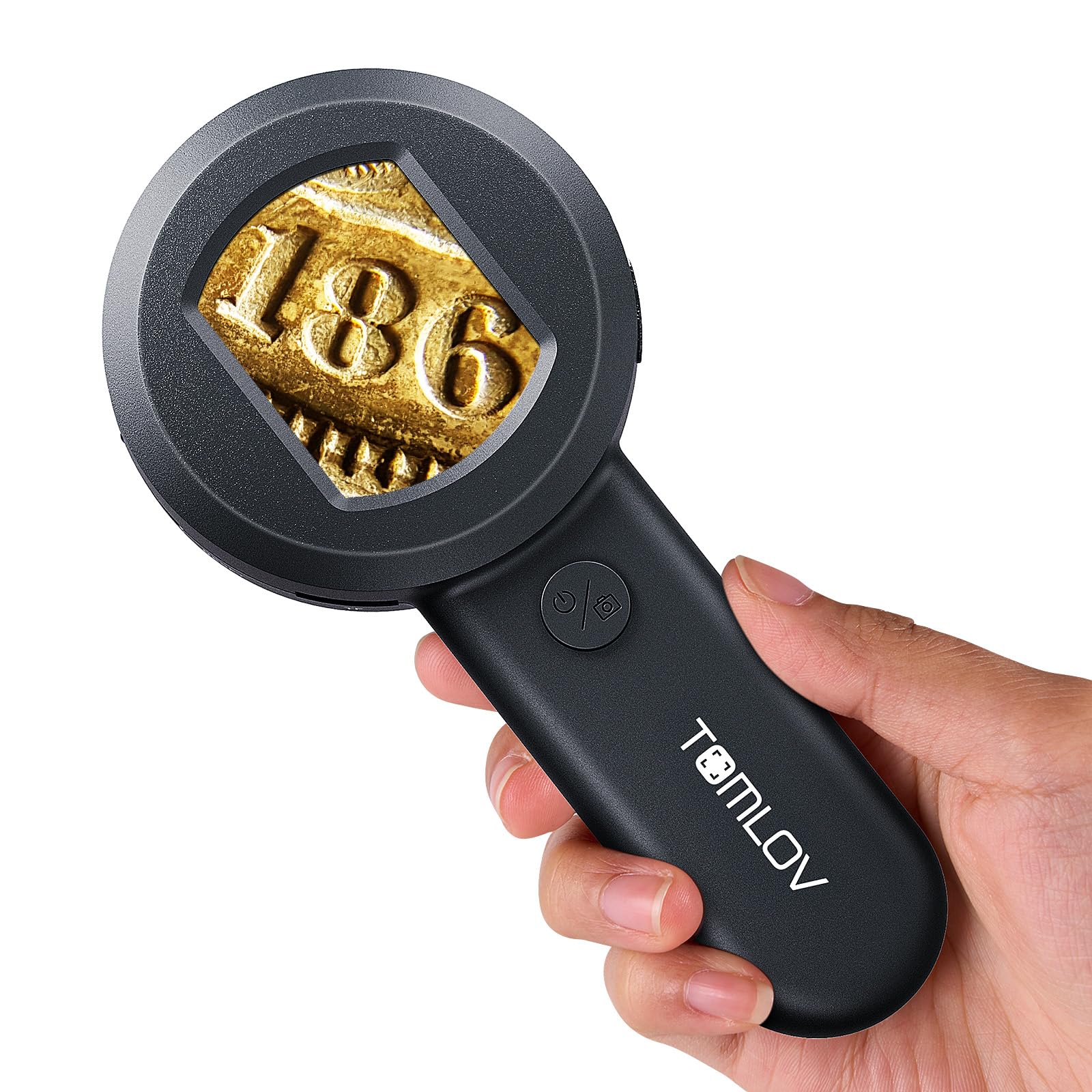
- 2-inch LCD screen with fixed 100x magnification and 4x zoom.
- Four dimmable white lights, four UV lights, and 16MP photo capture.
- Built-in storage for up to 300 photos and USB computer viewing.
Best For: Kids and adults who want a compact screen for examining coins, leaves, and other small objects.

Educational Insights GeoSafari MicroPro 95-Piece Set
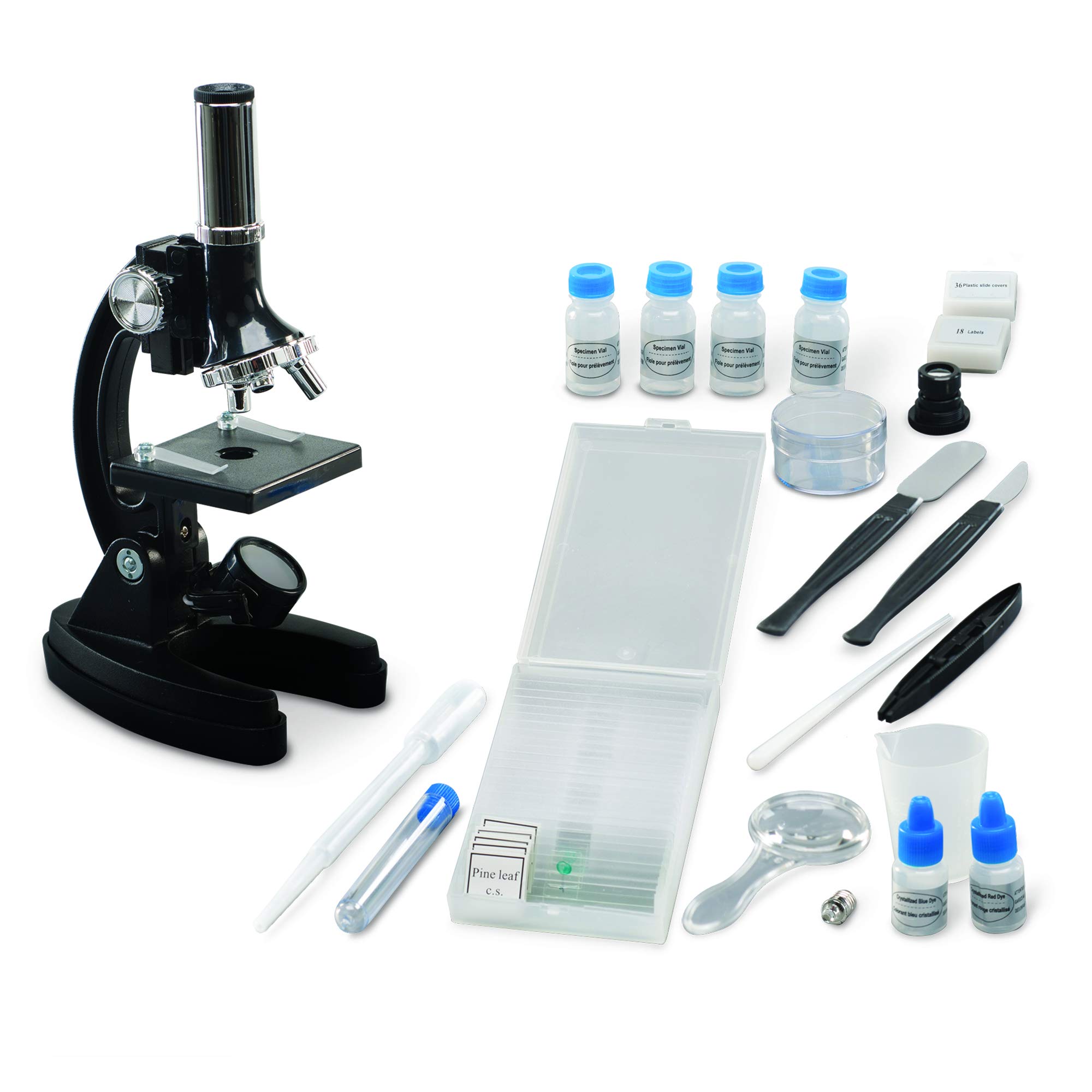
- Microscope provides 50x–600x magnification.
- 95-piece set includes prepared and blank slides, specimen tools, and storage case.
- LED illumination requires two AA batteries, sold separately.
Best For: School-age children ready to prepare specimens and work through structured microscope activities.
Learning Resources Elite Microscope
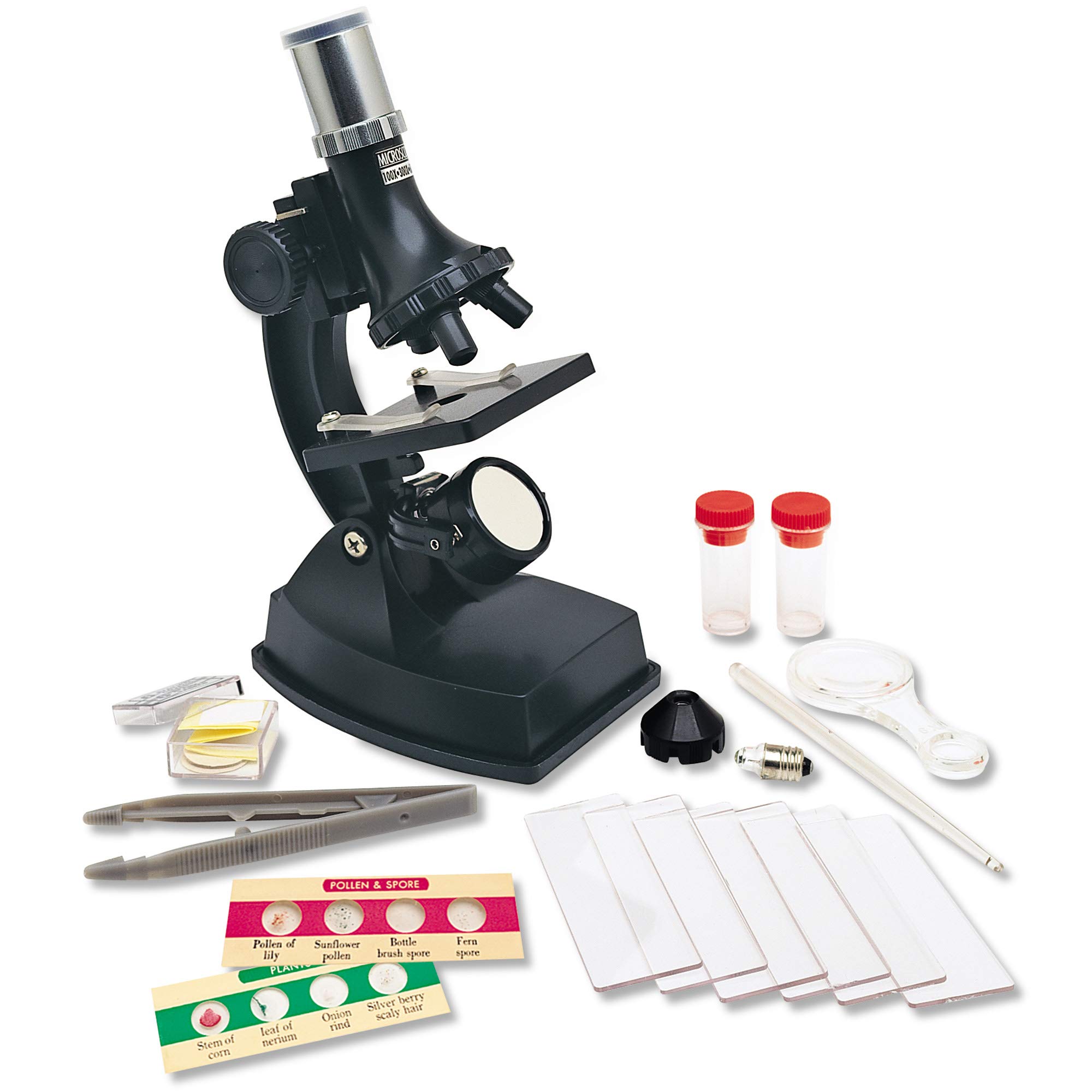
- Three magnification settings: 100x, 300x, and 600x.
- 21-piece set includes slides, vials, and tweezers.
- Can project a view onto a nearby white surface with the eyepiece removed.
Best For: Children who want a traditional tabletop microscope with a way to share views on a nearby surface.
Educational Insights GeoSafari Kidscope
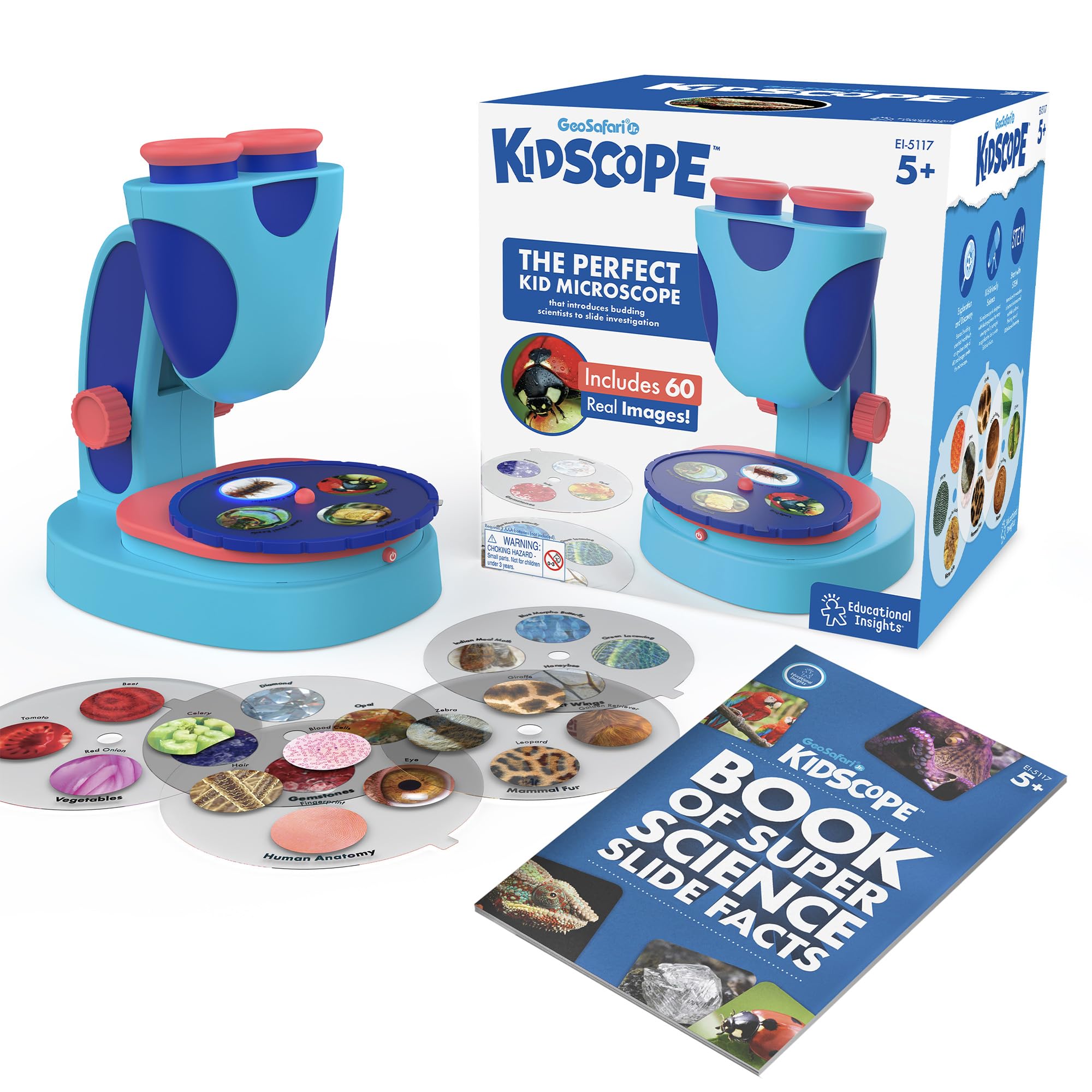
- Double eyepiece and easy-focus knob support beginner-friendly viewing.
- Includes 15 slides with 60 real images and a guide with over 200 facts.
- Built-in LED light requires three AAA batteries, sold separately.
Best For: Young beginners who benefit from prepared samples and simple, wide-field viewing.
Educational Insights GeoSafari My First Microscope
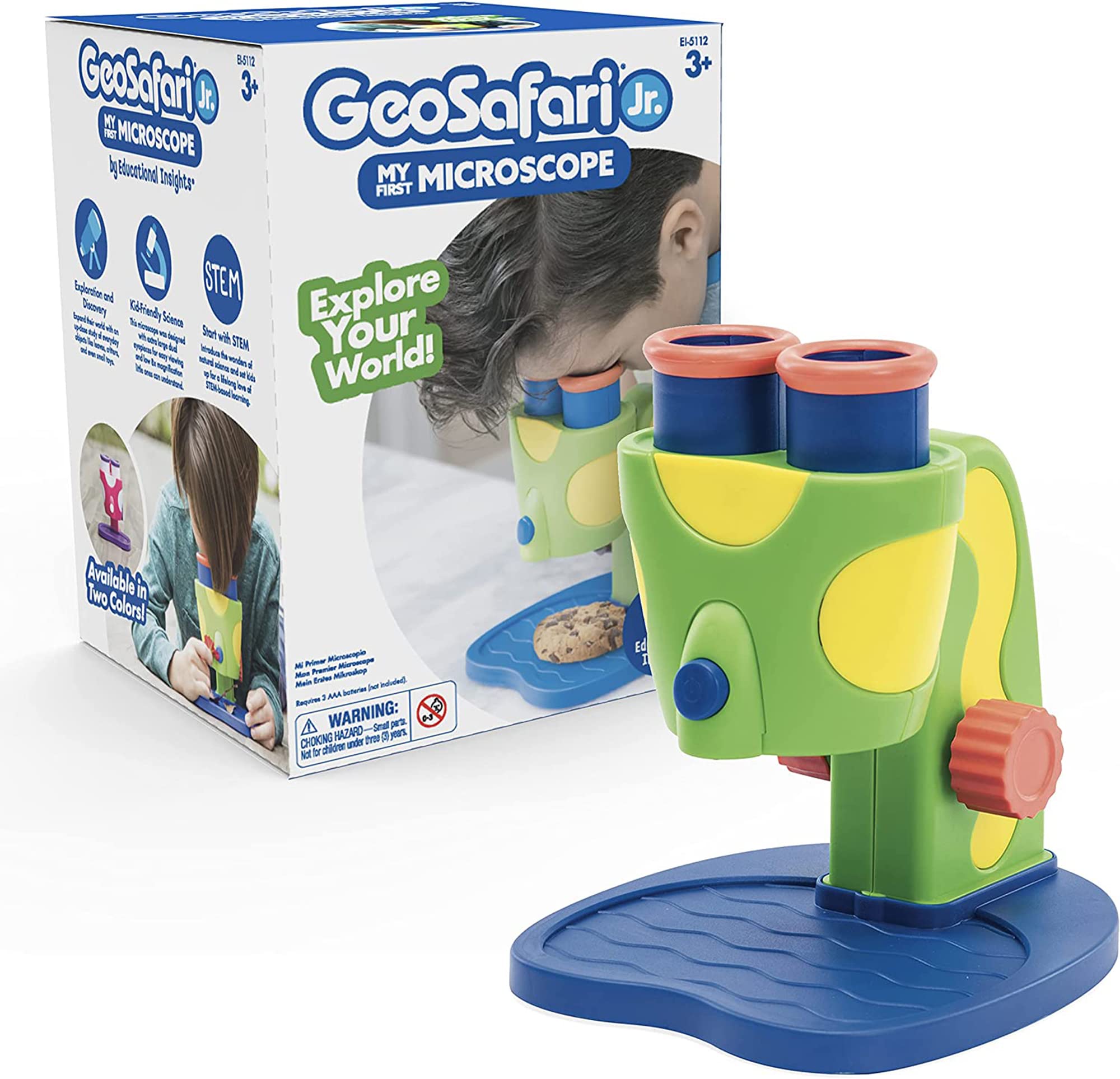
- 2.5x–8x magnification provides a wide field of view.
- Two extra-large eyepieces, kid-sized focus knob, sample tray, and non-skid feet.
- Includes 12 prepared slides with storage; LED requires three AAA batteries.
Best For: Very young children beginning to explore prepared slides with a simple, wide-field microscope.
Educational Insights GeoSafari Telescope & Microscope Set
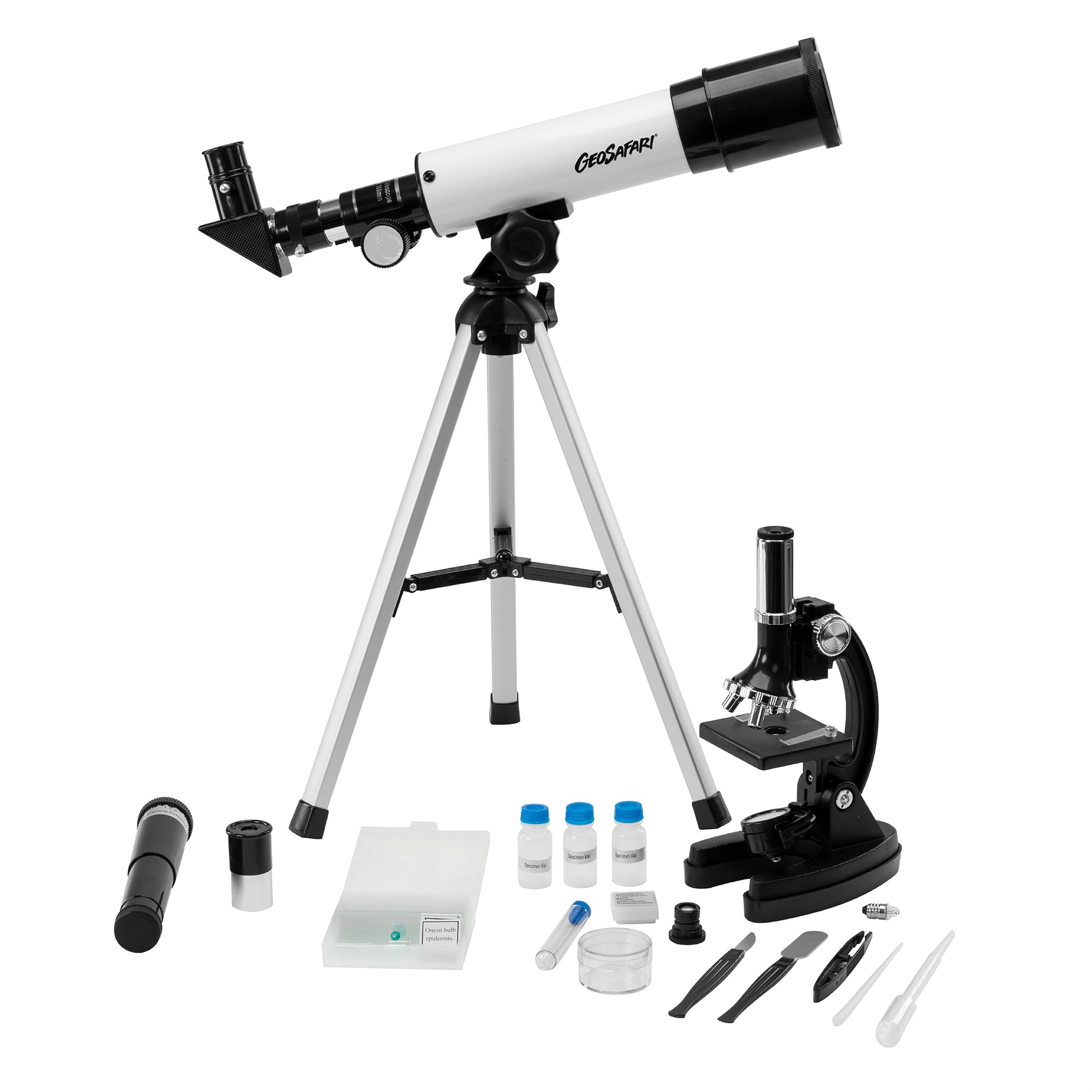
- Microscope offers 50x–600x settings, two glass eyepieces, and prepared-slide materials.
- Refractor telescope includes a 50 mm objective lens and 18x–80x magnification options.
- Microscope light requires two AA batteries, sold separately.
Best For: Families looking for both tabletop microscope activities and an introductory telescope in one kit.
Learning Resources Primary Science Viewscope
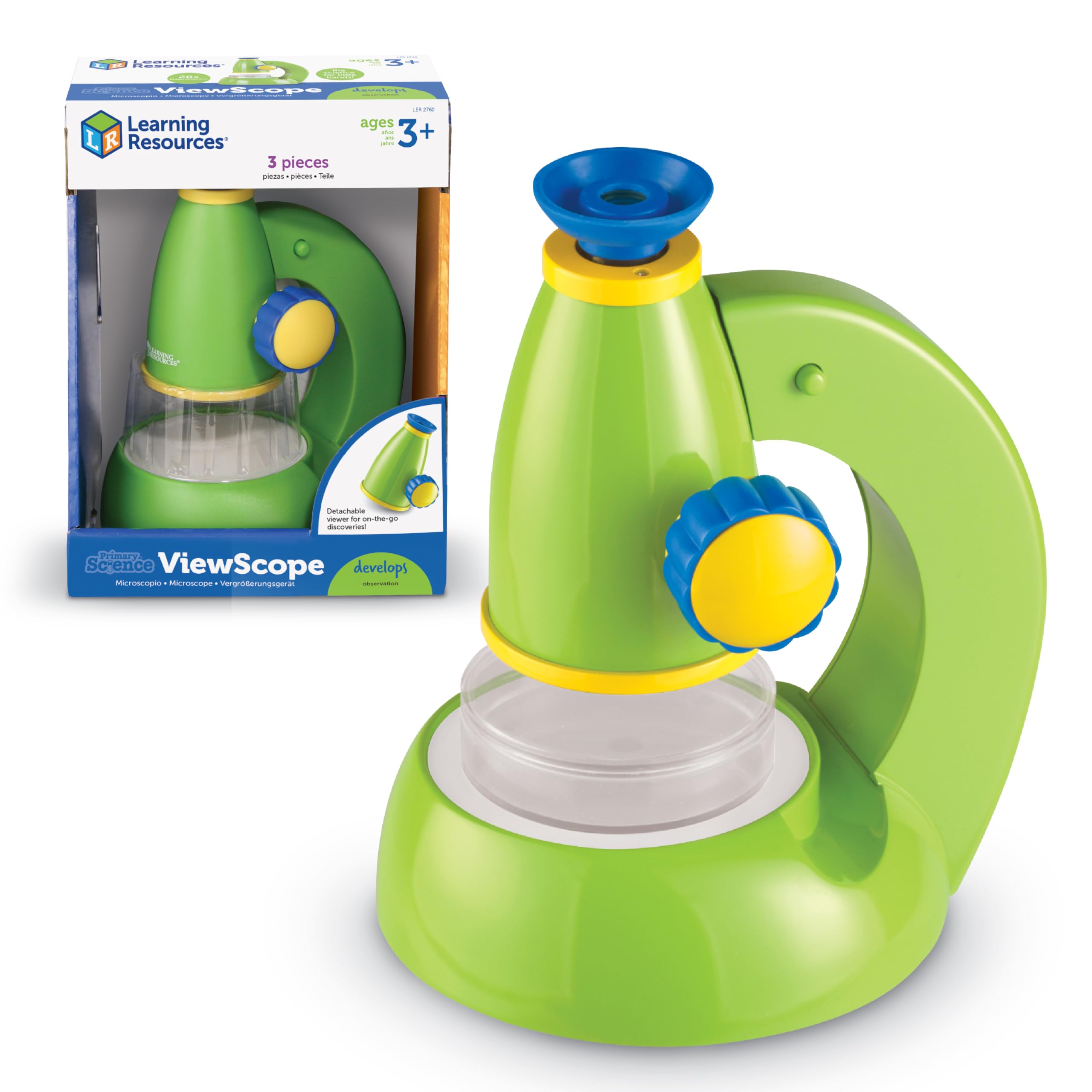
- 20x magnification with a large focus knob.
- Three-piece set includes detachable viewer, base, and clear plastic specimen case.
- Designed for ages 3 and up.
Best For: Preschool-age children who want a basic viewer for larger objects and simple specimen exploration.
Handheld Screen for Portable Close-Ups
TOMLOV P10 Microscope for Adults Kids, Handheld Coin Magnifier with Light for Error Coins, Portable Trichome Magnifying Glass 100X, Collector Pocket Jewelers Loupe, Digital Microscope with 2" Screen
The TOMLOV P10 puts a 2-inch LCD screen and fixed 100x magnification in a handheld format, so a child can view a close-up without looking through an eyepiece. It has four dimmable white lights, four UV lights, and 4x zoom, with image capture at 16MP and built-in storage for up to 300 photos.
A USB connection supports viewing on a computer. Its 3.9-ounce size suits short explorations around the house or garden.
The fixed focus works at about 0.3 inches, so it is best for small, flat subjects rather than slide-based microscope work.
Best For: Kids and adults who want a compact screen for examining coins, leaves, and other small objects.
| Pros | Cons |
|---|---|
|
|
Choose the P10 when viewing on a screen matters more than preparing traditional microscope slides. Its photo storage and USB connection add sharing options that the tabletop kits here do not specify.
The tradeoff is its close working distance and fixed focus, which suit quick checks of objects such as coins or leaves. Before buying, consider whether the child will be comfortable positioning the device over an object and whether a 50-minute maximum runtime suits typical sessions.
Large Slide Kit for Guided Science Projects
Educational Insights GeoSafari MicroPro 95-Piece LED Microscope Set - High Powered Microscope for Kids 8-12, Scientist Kit for Kids with Prepared Slides and Blank Slides, Home or Classroom Science Set
The GeoSafari MicroPro is a tabletop microscope set with 50x–600x magnification and a 95-piece collection of accessories. It includes prepared and blank slides, specimen-preparation tools, a storage case, and an activity guide.
That combination gives children a path from viewing ready-made samples to preparing their own. Its LED light runs on two AA batteries, which are not included.
The kit suits home or classroom science sessions where a child can work at a table and keep the accessories together. It offers a broader project setup than compact introductory microscopes, though it does not specify a digital screen or image capture.
Best For: School-age children ready to prepare specimens and work through structured microscope activities.
| Pros | Cons |
|---|---|
|
|
Pick the MicroPro for a child who wants to do more than look at prepared samples. Its 95 pieces, blank slides, tools, and activity guide create a more project-oriented setup than the simpler beginner models.
The compromise is a larger collection of parts to organize, and it uses a tabletop eyepiece rather than a specified digital display. Check that the child has a suitable work surface and that the required batteries are available.
Projectable Views and Three Magnification Levels
Learning Resources Elite Microscope, Microscope for Kids, Science Toys for Kids, 21 Pieces
The Learning Resources Elite combines three magnification levels—100x, 300x, and 600x—with a 21-piece kit that includes slides, vials, and tweezers. It can also project a view onto a nearby white surface: remove the eyepiece, darken the room, and tilt the microscope toward the surface.
That feature gives a group another way to look at findings together. The set is oriented toward hands-on slide exploration and specimen preparation.
It does not specify a digital display, camera, illumination type, or required power source, so those details are worth checking if they matter for your setup.
Best For: Children who want a traditional tabletop microscope with a way to share views on a nearby surface.
| Pros | Cons |
|---|---|
|
|
The Elite is a useful fit when a child wants conventional slide work and the option to share a view with others. Its three magnification choices and included vials and tweezers give it a clear activity focus.
The projection feature depends on room setup and is not the same as a digital screen with saved images. Compare it with the MicroPro if prepared and blank slides, more accessories, and a storage case are priorities; check the Elite’s power and lighting needs before purchase.
Prepared Slides and a Fact-Filled Guide
Educational Insights GeoSafari Kidscope - STEM Toys for Kids, Toddler Learning Toys, Kids Microscope with Prepared Slides, Science Set for Boys and Girls Ages 5+
The GeoSafari Kidscope is an introductory microscope designed around an easy-focus knob, a double eyepiece, and low magnification for a wide field of view. It includes 15 slides with 60 real images, a storage drawer, and a guide with more than 200 facts.
Those prepared materials let a child start exploring without first collecting and preparing specimens. The built-in LED light needs three AAA batteries, which are not included.
Its double eyepiece avoids the need to close one eye, a practical feature for younger users. Although it is a kids’ microscope, no digital display or image-capture function is specified.
Best For: Young beginners who benefit from prepared samples and simple, wide-field viewing.
| Pros | Cons |
|---|---|
|
|
Choose the Kidscope when prepared examples and straightforward viewing are more important than high magnification or digital sharing. Its fact guide adds material for discussion, while the storage drawer keeps the included slides within reach.
It is a tabletop eyepiece microscope, so it differs from the P10’s handheld screen approach. Check the child’s age and ability to position samples, and have three AAA batteries ready for the LED light.
Very Low Magnification for First Discoveries
Educational Insights GeoSafari My First Microscope
My First Microscope is built around a broad field of view and simple handling for early science activities. It has two extra-large eyepieces, a kid-sized focusing knob, non-skid feet, a sample tray, and an overhead LED light.
The 2.5x–8x magnification is much lower than the tabletop kits aimed at specimen study, which makes this a distinct first-exploration option rather than a high-power choice. Twelve prepared slides come with a storage case.
The light requires three AAA batteries, not included. This is a hands-on microscope rather than a digital model; no screen or image-capture function is specified.
Best For: Very young children beginning to explore prepared slides with a simple, wide-field microscope.
| Pros | Cons |
|---|---|
|
|
This model fits a younger child who needs an easy starting point and a wide view, not detailed high-magnification study. The large eyepieces, kid-sized control, and prepared slides keep the activity approachable.
Families seeking a digital screen should consider the TOMLOV P10 instead, while children ready for specimen projects may prefer a higher-power kit. Check that the intended subjects suit the 2.5x–8x magnification range.
Microscope and Telescope in One Science Set
Educational Insights GeoSafari Telescope & Microscope Set - Science Kit with Refractor Telescope and Microscope for Kids, Includes Prepared Slides, Discovery Toys, Science Gifts for Kids 8-12
This GeoSafari set pairs a microscope with a refractor telescope, so it covers tabletop specimen viewing and introductory stargazing. The microscope has 50x–600x power settings, 10x and 20x glass eyepieces, prepared slides, and materials to create slides.
The telescope has a 50 mm achromatic objective lens, all-glass optics, two interchangeable eyepieces, and magnifications of 18x, 36x, 40x, and 80x. Its tabletop tripod supports portable use.
The microscope light requires two AA batteries, not included. This two-in-one set is a broader science option, but it takes more space and includes a second instrument that may not matter to a microscope-focused buyer.
Best For: Families looking for both tabletop microscope activities and an introductory telescope in one kit.
| Pros | Cons |
|---|---|
|
|
Choose this set if the child is interested in both tiny specimens and distant objects. The telescope adds a distinct activity that the microscope-only kits do not provide, while the microscope still offers a 50x–600x range and slide materials.
If the goal is only to study slides, the MicroPro offers a 95-piece microscope-focused collection. Consider whether the telescope will be used often enough to justify the combined kit, and plan for the microscope’s two AA batteries.
Detachable Viewer for Simple Outdoor Finds
Learning Resources Primary Science Viewscope - 3 Pieces, Ages 3+ Microscope for Kids, Beginner Microscope
The Primary Science Viewscope keeps its setup simple with a detachable viewer, a base, and a clear plastic specimen case. Its 20x magnification and large focus knob are intended to familiarize young children with using a microscope.
The detachable design offers a different way to inspect objects than a fixed tabletop eyepiece, while the included base can support stationary viewing. This is a basic three-piece beginner tool; prepared slides, a digital screen, lighting, and image capture are not specified.
It suits casual early exploration more than detailed slide work, so consider what kinds of samples the child will want to examine.
Best For: Preschool-age children who want a basic viewer for larger objects and simple specimen exploration.
| Pros | Cons |
|---|---|
|
|
The Viewscope makes sense for a preschooler who needs a simple introduction to magnified viewing, especially when handling larger objects is the goal. Its detachable viewer and specimen case distinguish it from the eyepiece microscope kits.
The tradeoff is its 20x magnification and lack of specified slide materials or digital features. If the child wants prepared samples or higher magnification, the Kidscope or MicroPro offers a more developed slide-based setup.
How to Choose Digital Microscopes For Kids
How We Picked Digital Microscopes for Kids
These seven candidates offer different ways for children to explore small details, from a handheld screen and image capture to tabletop eyepiece microscopes with prepared slides. We prioritized products with clear child-oriented use cases, including beginner controls, included samples, specimen tools, magnification choices, portability, or a way to share views.
The TOMLOV P10 is the only candidate here with a built-in LCD, photo storage, and computer connection. The other models are hands-on microscope kits, so they suit children who are comfortable viewing through eyepieces or exploring samples without digital capture.
Age and activity matter as much as magnification. The GeoSafari My First Microscope and Learning Resources Viewscope target early exploration with simpler controls and lower magnification.
The Kidscope adds prepared images and a fact guide, while the MicroPro and Elite offer higher-power settings and accessories for more involved slide activities. The telescope-and-microscope set adds astronomy for families who want a broader science kit.
Comparing Digital Microscopes for Kids
Start with viewing style. A digital microscope for children can mean a handheld device with its own screen, as with the P10, or a traditional tabletop microscope that lets children inspect samples through an eyepiece.
The P10 can save photos and connect to a computer, but it uses fixed 100x magnification and is positioned very close to the object. The tabletop models offer more conventional slide work; among them, the MicroPro and Elite provide settings up to 600x.
Next, consider what comes in the box. The Kidscope and My First Microscope include prepared samples for a quick start.
The MicroPro supplies prepared and blank slides, specimen tools, and a storage case, while the Elite includes slides, vials, and tweezers. The Viewscope has a detachable viewer and specimen case.
For a wider science experience, the telescope-and-microscope kit combines slides with a refractor telescope. Check battery needs too: several models require batteries that are not included, and the P10 supports up to 50 minutes of use.
| Product | Standout features | Best for |
|---|---|---|
| TOMLOV P10 Handheld MicroscopeCheck Price |
| Kids and adults who want a compact screen for examining coins, leaves, and other small objects. |
| Educational Insights GeoSafari MicroPro 95-Piece SetCheck Price |
| School-age children ready to prepare specimens and work through structured microscope activities. |
| Learning Resources Elite MicroscopeCheck Price |
| Children who want a traditional tabletop microscope with a way to share views on a nearby surface. |
| Educational Insights GeoSafari KidscopeCheck Price |
| Young beginners who benefit from prepared samples and simple, wide-field viewing. |
| Educational Insights GeoSafari My First MicroscopeCheck Price |
| Very young children beginning to explore prepared slides with a simple, wide-field microscope. |
| Educational Insights GeoSafari Telescope & Microscope SetCheck Price |
| Families looking for both tabletop microscope activities and an introductory telescope in one kit. |
| Learning Resources Primary Science ViewscopeCheck Price |
| Preschool-age children who want a basic viewer for larger objects and simple specimen exploration. |
Choosing a Kids' Microscope for Age and Activity
For very young children, large controls, a broad view, and ready-made samples can make the first session easier. My First Microscope offers extra-large eyepieces and a kid-sized focusing knob, while the Kidscope pairs easy focus with prepared slides and a guide.
The Viewscope keeps the parts count low and has a detachable viewer. These are useful starting points when the goal is noticing details rather than studying specimens at high power.
Older or more engaged beginners may want to prepare slides and compare magnification levels. The MicroPro has blank slides, specimen tools, and an activity guide; the Elite has three magnification settings and can project a view onto a nearby white surface.
Families choosing a microscope and telescope set should consider whether the child wants both activities, since the astronomy equipment adds another setup to store and use.
Digital Microscope Features for Sharing and Saving
A screen changes the activity: children can view a close-up together without taking turns at one eyepiece. The P10’s 2-inch LCD, photo storage, and USB connection support that kind of sharing.
Its lights include adjustable white LEDs and UV LEDs, and its 4x zoom is separate from the fixed 100x magnification. Before choosing it, check whether its close working distance and up-to-50-minute runtime fit the subjects and length of the activity.
If digital capture is not needed, a traditional kids' microscope can still support shared learning through prepared slides, guides, or projection. The Elite’s projection feature depends on a darkened room and nearby white surface.
The Kidscope’s fact guide can help prompt discussion, while the larger kits supply materials for children to make their own slides.
Which Kids' Microscope Should You Buy?
Choose the TOMLOV P10 for screen-based close-ups and saved images. Pick the GeoSafari My First Microscope or Learning Resources Viewscope for basic early exploration, or the Kidscope for prepared slides and a fact-filled guide.
The MicroPro suits children ready for a larger set of specimen tools and blank slides; the Elite adds a projection option for shared viewing. Choose the telescope-and-microscope set when the child wants both microscope and astronomy activities.
Match the kit to the child’s age, preferred viewing style, and interest in preparing samples, then check battery needs and any details that matter for your intended setup.